Automation adoption continues to rise as manufacturers push for higher throughput and lower operating costs. The industrial automation market reached USD 221.64 billion in 2025, reaching USD 325.51 billion by 2030 at a 7.99% CAGR. Reflecting strong investment in automated production systems.
Conveyors are the backbone of automated packaging and material-handling, enabling reliable product flow, synchronizing equipment, and reducing manual touchpoints.
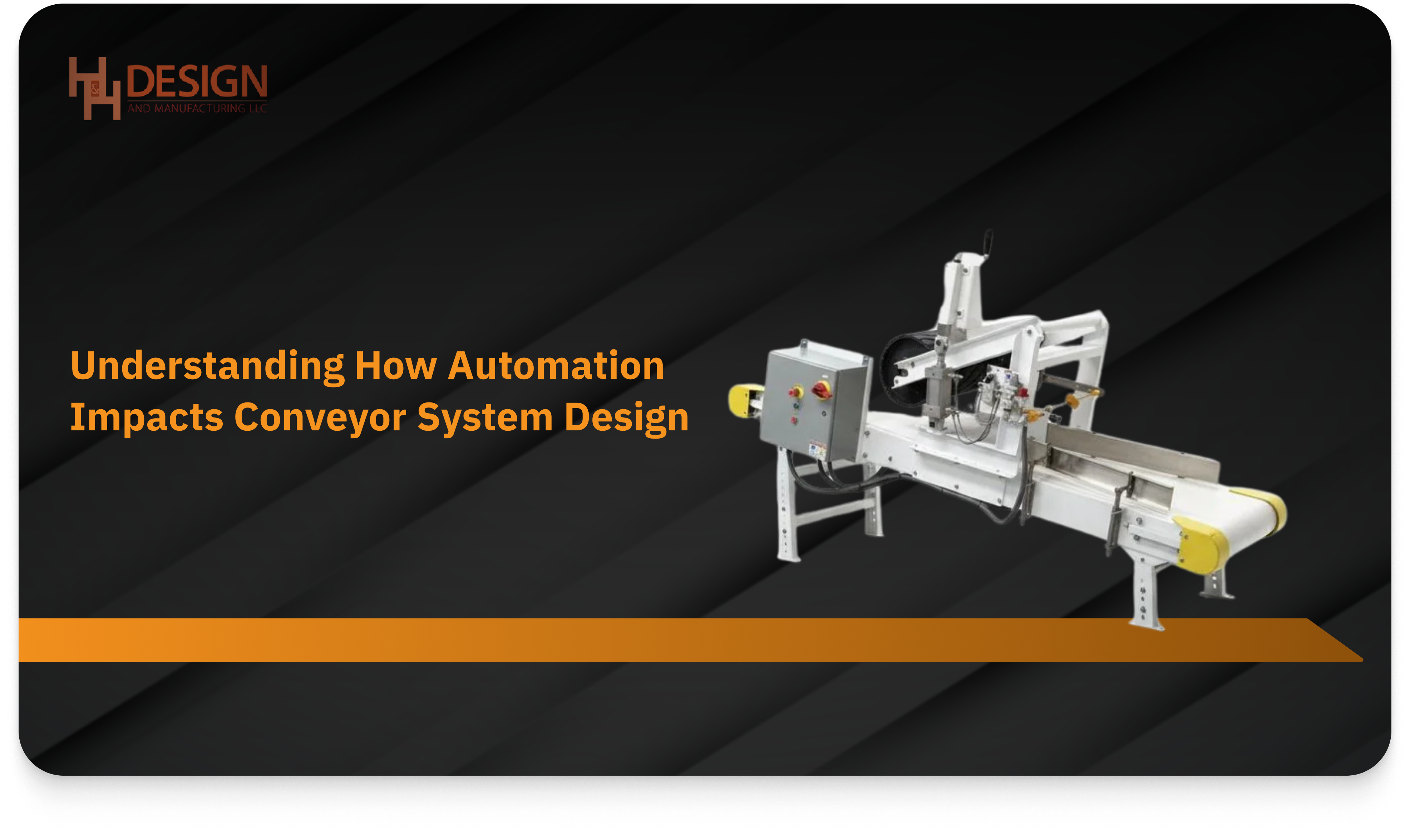
This leads to a key question: how does automation shape the design of conveyor systems?
Modern facilities face pressures such as accuracy, dust control, system integration, operator safety, and consistent flow, all of which influence conveyor design choices.
In this article, we’ll explain how automation impacts conveyor system design and what facilities should consider when building future-ready lines.
Key Highlights
Automation demands precise, predictable product flow, pushing conveyors to deliver consistent speed, spacing, and alignment to keep fillers, sealers, and palletizers running smoothly.
Modern conveyors must integrate with sensors, PLCs, and smart controls, enabling real-time adjustments, jam detection, and synchronized communication across automated equipment.
Variable-speed control and VFD-driven designs are now essential, allowing conveyors to accelerate, slow, or stop automatically based on load conditions and downstream requirements.
Robotics and high-throughput systems require conveyors engineered for accuracy, with stable orientation, dust control, safe transitions, and rugged builds for abrasive or powder-heavy environments.
Automation-ready conveyors prioritize durability and customization, supporting 24/7 operation, tight plant footprints, and seamless integration with advanced filling, weighing, and palletizing equipment.
Why Automation Is Changing Conveyor System Requirements?
As manufacturers push for higher speed, accuracy, and labor efficiency, conveyors must evolve from basic transport equipment into fully automated, intelligent components of the production line.
Automated lines depend on precise, synchronized movement, meaning conveyors must deliver consistent speed and spacing to keep upstream and downstream equipment running efficiently.
A slowdown, jam, or misalignment on a single conveyor can cascade across the entire system, causing product backups, wasted materials, or unexpected downtime.
Modern conveyors must be smarter and more responsive, adjusting in real time to variable loads, product flow changes, and machine communication signals.
Sensors, PLCs, and integrated controls are now essential, enabling conveyors to track product position, detect faults instantly, and maintain optimal flow without manual intervention.
High-throughput environments, especially those involving powders, grains, minerals, or food ingredients, demand rugged designs, sealed components, and materials that can withstand dust, abrasion, moisture, and continuous operation.
Industries like food, chemicals, agriculture, mining, and dairy face unique pressures such as sanitation requirements, particle control, corrosive materials, and heavy wear, making advanced conveyor engineering critical to automated success.
How Does Automation Impact the Design of Conveyor Systems?
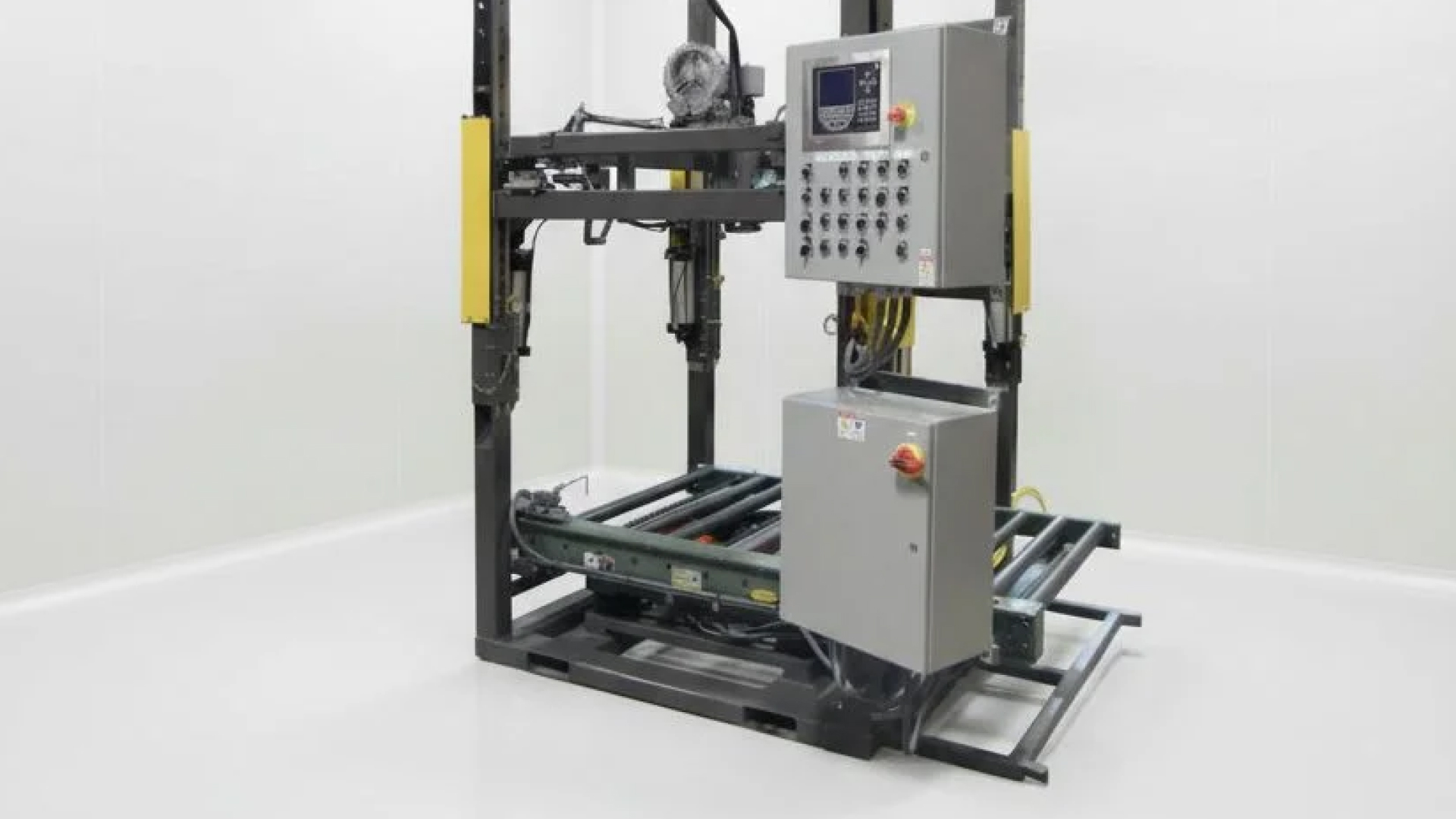
As automation becomes standard across manufacturing and packaging lines, conveyor systems must be engineered with greater precision, intelligence, and reliability. Automation doesn’t just change how conveyors operate; it also reshapes how they are designed from the ground up.
A. Automated Lines Require Consistent, Predictable Product Flow
Automated equipment can only perform at peak efficiency when product flow remains constant. Conveyors now play a critical role in delivering that stability.
Conveyors must supply steady, uninterrupted output to fillers, sealers, palletizers, and inspection stations.
Line speed must be matched to filler cycle times to prevent overflow or starvation of downstream equipment.
Even small variations in spacing or speed can cause jams, backups, or unnecessary downtime.
Example: H&H conveyors are commonly paired with Series 52 and Series 70 filling systems and bulk bag fillers, ensuring smooth, consistent feeding across automated lines.
B. Integration with Sensors, Scales, and Controls
Modern conveyors are no longer standalone mechanical units; they are data-connected devices that support automated decision-making.
Automated systems often integrate components such as:
Photo eyes
Motion/position sensors
Load cells
Checkweighers
PLC communication modules
Because of this, conveyors must incorporate cable routing, enclosure panels, control interfaces, and sensor mounting points into their design. Many H&H systems integrate directly with UL-certified control panels to ensure safe, compliant, and reliable operation.
C. Programmable Speed Control & Variable Frequency Drives (VFDs)
Automation requires conveyors to adjust dynamically as conditions change.
Conveyors must speed up, slow down, or stop in precise coordination with other equipment.
VFDs allow accurate control of motor speed, ensuring synchronized movement across the entire line.
This is especially critical for weighing, dosing, and filling operations, where even minor fluctuations can affect accuracy.
Programmable speed control ensures that automated lines maintain both consistency and precision during high-throughput production.
D. Designing for Robotic or Semi-Automated Packaging Stages
The rise of robotic palletizers, bag placers, and pick-and-place systems adds new design requirements for conveyors.
Robots rely on consistent product spacing and orientation to function effectively.
Conveyors must maintain precise positioning so robotic end-effectors can grip, lift, or palletize accurately.
Sensors help manage bag separation, flow tracking, and accumulation, preventing collision or misalignment.
Automation-ready conveyor designs ensure seamless interaction with both robotic and semi-automated equipment.
E. Enhanced Safety & Dust Management Requirements
As automation reduces manual handling, the focus turns to system cleanliness, safety, and environmental control.
Transfer points and chute transitions require dust mitigation to protect sensors and maintain air quality.
Designs often include guards, covers, dust-tight housings, and engineered sealing.
These features are essential for powders such as flour, cement, starch, pigments, fertilizers, and chemical blends.
Effective dust management ensures both operator safety and equipment reliability in automated environments.
F. Durability & Maintenance Minimization
Automated lines expect near-continuous operation. Conveyors must deliver long-term performance with minimal intervention.
Systems are designed for long duty cycles, heavy loads, and abrasive materials.
Continuous operation means components must resist wear and maintain alignment over time.
Reduced maintenance is essential to avoid disrupting automated workflows.
H&H conveyors are built for industrial-duty performance, supporting 24/7 production demands across harsh environments.
G. Customization for Line Layout & Integration
Automated layouts rarely follow a straight, simple path. Conveyor design must adapt to the facility, not the other way around.
Conveyors often need to:
Fit compact or irregular footprints
Incorporate incline/decline transitions
Support bag turning, merging, diverting, or accumulation
Integrate seamlessly with upstream fillers and downstream palletizers or packaging stations
H&H’s flexible conveyor systems are engineered to adapt to complex automation layouts, ensuring smooth flow from end to end.
Key Automation-Driven Design Features to Look For
As facilities move toward higher levels of automation, certain conveyor features become essential for performance, reliability, and long-term scalability. The checklist below highlights the most important capabilities modern operations should prioritize.
Variable-speed control to match conveyor output with fillers, sealers, palletizers, and robotic systems.
PLC/HMI compatibility so the conveyor can communicate seamlessly with automated equipment and allow operators to adjust settings in real time.
Smart sensors for flow management, including photo eyes and position sensors, to maintain spacing, detect jams, and regulate throughput automatically.
Durable belts designed for abrasive or dusty products, ensuring long service life in environments handling powders, chemicals, minerals, or grains.
Modular layouts that support future expansion, allowing facilities to add conveyors, turns, merges, or accumulation zones as automation needs grow.
Accurate transfer points engineered to prevent jams, product drops, or misalignment during high-speed production.
Customizable guides, rails, and spacing controls to maintain product orientation and ensure consistent flow into weighing, filling, sealing, or robotic processes.
Integration capability with H&H bagging and filling equipment, such as Series 20, 22, 52, 54, 55, 61, and 70, ensuring smooth product handoff between conveyors and automated machinery.
How Conveyor Automation Improves Packaging Line Performance
When conveyors operate as part of an integrated automated system, the entire packaging line becomes faster, more accurate, and more reliable. By connecting conveyors with fillers, sensors, and controls, facilities unlock performance gains that manual or semi-manual setups can’t match.
Higher throughput as products move continuously and predictably between each stage of the process.
More accurate bagging and weighing, since conveyors feed fillers at consistent speeds and spacing, reducing overfills and underfills.
Fewer bag jams and manual interventions, thanks to automated spacing, smoother transfers, and intelligent flow management.
Lower labor requirements, allowing operators to focus on oversight rather than repetitive handling or troubleshooting.
Better product quality and consistency, with precise timing and reduced material exposure or contamination risks.
Cleaner, safer plant operation, supported by dust-controlled conveyor designs, reduced manual contact, and improved environmental management.
Ultimately, conveyor automation works best when viewed as a connected system, with conveyors, fillers, scales, sensors, and controls all working together. When these elements are synchronized, the entire packaging line runs smoother, faster, and more efficiently, delivering maximum value with minimal downtime.
How H&H Designs Conveyors Built for Modern Automated Packaging Lines
Automated packaging lines demand more from conveyors than ever before, and many facilities struggle with flow disruptions, equipment wear, and integration issues that slow production.
H&H designs conveyors engineered specifically to overcome these real-world challenges. By targeting the root causes of downtime, like misalignment, backups, and outdated controls, H&H helps plants maintain consistent throughput. The result is a system that supports fully integrated, reliable, and automation-ready operations.
Engineered for High-Demand, High-Throughput Operations: Designed to run in sync with H&H’s high-capacity filling systems, such as the Series 52 Single Auger Filler and Series 54 Dual Auger Filler, ensuring smooth bag transfer and reliable downstream movement even in continuous production environments.
Multiple Conveyor Types for Complete Line Flexibility: H&H offers a full conveyor lineup, including Slider-Bed Sealing Conveyors, Incline/Decline Conveyors, Bag-Turn Conveyors, 90° Transfer Conveyors, Live-Roller Conveyors, and Gravity-Roller Conveyors, supporting a wide range of packaging systems from (e.g, Series 5A Mechanical Fillers to advanced Series 70 Net-Weigh Fillers)
Customizable Layouts for Space-Restricted Facilities: Conveyor systems can be engineered to fit around existing equipment such as the Series 52 OM, Series 52 QC Quick-Clean Auger Filler, or Series 61/61S Vibratory Fillers, enabling efficient line integration even in tight or irregular plant footprints.
Compatible With a Broad Spectrum of Products and Packaging Systems: Built to handle powders, granules, pellets, and bulk solids processed through H&H systems like the Series 330E Bulk Packaging System, Series 110DS Bulk Packaging System, and Series 55 Air Packer, ensuring consistent conveying for both open-mouth and valve bag operations.
Heavy-Duty Construction for Industrial Reliability: Conveyors are constructed to match the durability of H&H’s industrial fillers, such as the Series 52, Series 54, Series 52 OM-V Combo Filler, and Series 20/22 Gross-Weigh Fillers, providing long service life, reduced wear, and low maintenance in demanding production environments.
Custom Solutions for Specialized Applications: Beyond standard conveyors, H&H offers engineered solutions that align with specialty equipment such as the Series 52 QC Quick-Clean Filler (for frequent changeovers) or Series 61S Enclosed Vibratory Filler (for dust-sensitive powders), ensuring optimized flow for unique materials or processes.
H&H provides practical, engineered conveyor solutions built for automated packaging lines.
Conclusion
Automation is reshaping how modern plants design and operate their conveyor systems. Consistent product flow, smart controls, durable construction, and seamless integration with fillers and packaging equipment are no longer optional; they’re essential for achieving higher throughput, better accuracy, and long-term operational efficiency. Facilities that plan these elements from the start are better positioned to build packaging lines that stay reliable, scalable, and automation-ready.
H&H specializes in conveyor systems engineered specifically for automated dry-bulk packaging. From variable-speed controls to UL-certified panels, from custom layouts to heavy-duty construction, every conveyor is built to work effortlessly with H&H’s automated bagging, weighing, and palletizing equipment.
Planning an automated packaging upgrade? Talk to an H&H engineer about your conveyor system requirements.
FAQs
1. What industries benefit most from automated conveyor systems?
Industries handling powders, granules, and bulk materials, such as food, chemicals, agriculture, mining, and dairy, gain the most from conveyor automation. These sectors require consistent flow, dust control, and durable equipment. Automated conveyors help improve accuracy, uptime, and overall packaging efficiency.
2. What features should automated conveyor systems include?
Automated conveyors benefit from variable-speed drives, integrated sensors, and PLC/HMI connectivity to maintain accuracy and throughput. Durable belts and frames are essential for handling powders and abrasive materials. Modular layouts and precise transfer points also help align with automated fillers and robotic systems.
3. Are conveyors required for automated bag-filling lines?
In most cases, yes, conveyors are fundamental to maintaining steady product flow into weighing, filling, and sealing equipment. They help control spacing, reduce manual handling, and prevent backups that cause downtime. Without conveyors, automated lines cannot achieve consistent speed or accuracy.
4. How does conveyor speed affect automated packaging performance?
Conveyor speed directly influences filler accuracy, overall throughput, and downstream equipment efficiency. Too much variation can lead to jams, misalignment, or inconsistent weighing. Variable-frequency drives (VFDs) allow fine-tuned speed adjustments to keep the entire line synchronized.
5. Can conveyor systems be retrofitted for automation?
Yes, many conveyor systems can be upgraded with sensors, VFDs, updated controls, and new layouts to support automation. Retrofitting allows plants to improve performance without replacing an entire line. H&H often integrates conveyors with existing fillers to modernize older packaging systems.