In an era where plants are pushing harder than ever for automation, one system quietly carries most of the load: pneumatic conveying. As manufacturers scale up, reduce labor, and tighten hygiene and safety standards, more facilities are turning to enclosed air-driven conveying to move powders and granules cleanly and reliably.
Pneumatic conveying uses air to transport dry bulk materials through a sealed pipeline, minimizing dust, contamination, and spillage compared to open mechanical methods. Among the two primary approaches, pressure conveying stands out for its ability to move materials over longer distances, at higher throughputs, and to multiple discharge points.
Yet the challenges remain familiar: dust control, product degradation, inconsistent flow, labor shortages, and contamination risks.
In this article, we’ll break down what pressure conveying is, how it works, and where it fits best in bulk material handling operations.
Key Highlights
Pressure conveying uses positive air pressure to move powders and granules through sealed pipelines, enabling long-distance, high-capacity transfer.
It offers cleaner, safer handling than mechanical systems by reducing dust, contamination, and manual interaction.
Dilute phase suits fast, free-flowing materials, while dense phase protects fragile or abrasive products with gentler, low-velocity movement.
Pressure conveying is ideal when plants need long runs, multiple discharge points, higher throughput, or better dust control.
When integrated with H&H fillers and packaging systems, steady material flow boosts weighing accuracy, reduces surges, and supports full automation.
What Is Pneumatic Conveying?
Pneumatic conveying is the process of moving dry bulk materials, such as powders, granules, and pellets, through an enclosed pipeline using air or another gas as the transport medium. Instead of relying on belts, screws, or buckets, pneumatic systems generate airflow that pushes or pulls material through the line. The material becomes suspended in the moving air stream (dilute phase) or moves in slugs/plugs (dense phase), depending on system design and product characteristics.
At its core, air provides the energy, the pipeline provides the path, and the material rides the airflow from point A to point B.
How Pneumatic Conveying Differs From Mechanical Conveying
Mechanical conveying, think belt conveyors, bucket elevators, drag chains, and screw augers, moves product on a physical surface or inside a mechanical enclosure. This works well for coarse, free-flowing materials but comes with drawbacks: open transfer points create dust, multiple moving parts require maintenance, and sanitation can be time-consuming.
Pneumatic conveying, by contrast:
Uses no exposed moving parts in the material stream
Moves material in a completely sealed system
Easily navigates vertical lifts, long horizontal runs, and tight plant layouts
Reduces manual handling and operator contact
Relocates scalable components (blowers, filters, rotary valves) while keeping the conveying line simple
Because of this simplicity and flexibility, pneumatic conveying often replaces or complements mechanical systems in modern plants seeking higher automation and cleaner operation.
Why Pneumatic Conveying Is Preferred in Food, Chemical, and Fine-Powder Applications
Industries handling sensitive, hazardous, or dusty materials choose pneumatic conveying for several key reasons:
1. Superior Sanitation & Product Protection
Enclosed pipelines protect materials from outside contaminants.
No belts or chains that trap residuesfaster washdown and fewer hygiene risks.
Ideal for ingredients like flour, sugar, spices, resins, additives, and active chemicals.
2. Better Dust Control & Workplace Safety
Sealed transfer dramatically reduces airborne dust, improving air quality and reducing explosion hazards.
Easier compliance with OSHA, NFPA, and food safety standards.
3. High Compatibility With Automation
Blowers, valves, and sensors integrate naturally into automated batching, dosing, and production lines.
Remote monitoring of pressure, flow, and filter performance increases uptime.
4. Gentle Material Handling Options
Dense-phase conveying can significantly reduce the degradation of fragile powders or pellets.
Ultimately, pneumatic conveying provides cleaner, safer, more consistent material transfer, making it the go-to solution for modern plants working with fine powders and sensitive ingredients.
Understanding Pressure Conveying
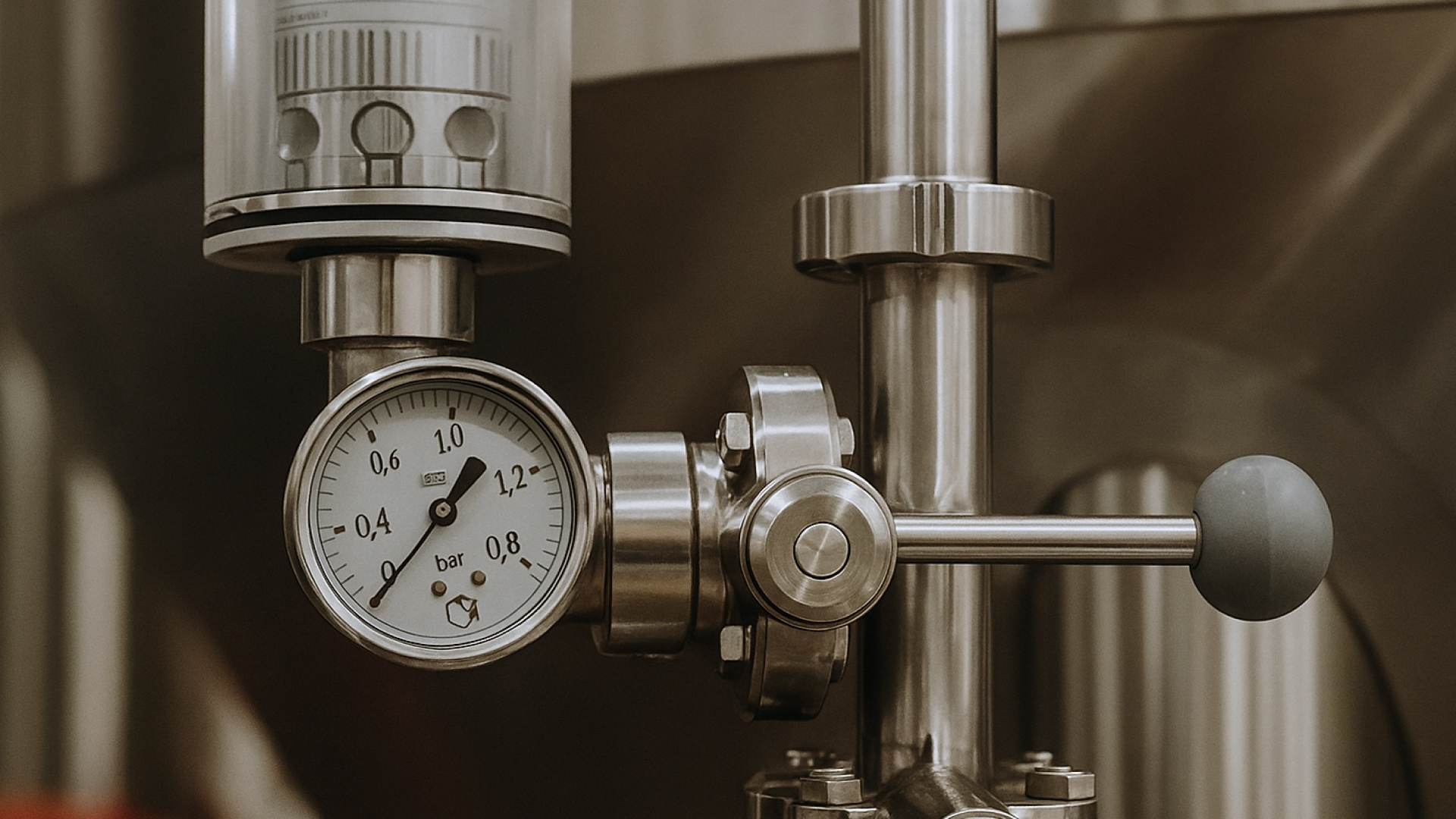
Pressure conveying is a core method in pneumatic transport, especially when plants need to move material farther, faster, and with tighter control. The following sections break down exactly what it is and how it works.
A. What Is Pressure Conveying?
Pressure conveying is a pneumatic conveying method that uses air at pressures above atmospheric to push dry bulk materials through a pipeline. Instead of pulling material with a vacuum, the system creates a positive pressure zone at the starting point, sending powders, granules, or pellets toward their destination.
Because the system delivers strong, controlled airflow, pressure conveying is ideal for:
Long conveying distances (hundreds of feet or more)
High throughput requirements
Both dilute-phase and dense-phase conveying, depending on air velocity and system design.
Positive pressure = forward push, making it the go-to solution for large-scale material transfer.
B. How Pressure Conveying Works
A pressure conveying system follows a straightforward sequence:
Air Generation: A blower or air compressor creates the high-pressure airflow needed to move material through the pipeline.
Material Feeding: Product enters the conveying line through a rotary airlock, screw feeder, or pressure pot/hopper, all designed to meter material while maintaining system pressure.
Airflow Pushes Material: The pressurized air pushes the material through the conveying pipe toward its destination. Depending on system settings, material may travel suspended in air (dilute phase) or in slow-moving slugs (dense phase).
Material Arrives at the Receiver: At the end of the line, whether a silo, day bin, blending hopper, or bulk bag filler, a receiver separates the product from the air stream.
Dust Filtration: Any remaining dust is captured by a filter receiver or dust collector, ensuring clean air is vented back to the atmosphere or reuse.
Key Components of a Pressure Conveying System
Each component plays a specific role in maintaining pressure, controlling flow, and ensuring safe, consistent material handling.
Air Compressor / Blower: Supplies the positive pressure that drives material through the pipeline.
Rotary Valve / Airlock Feeder: Introduces material into the line without losing system pressure.
Conveying Line (Pipes or Tubing): Creates the sealed path for the air–material mixture to travel.
Diverter Valves: Allow the system to send material to multiple destinations as needed.
Receiver / Bin / Hopper: Separates conveyed material from the air at the discharge point.
Dust Filtration System: Captures fines and prevents dust emissions, improving cleanliness and safety.
Types of Pressure Conveying Systems
Pressure conveying isn’t one-size-fits-all; its performance depends heavily on how fast the air moves and how densely the material is loaded in the pipeline. These two modes determine how gently, efficiently, and reliably materials travel.
1. Dilute Phase Pressure Conveying
This is the most common form of pressure conveying, designed to keep material fully suspended in a fast-moving air stream.
Dilute phase pressure conveying uses high air velocity and low material concentration, meaning the particles stay airborne throughout the pipeline. This makes it ideal for powders and granules that are free-flowing, non-abrasive, and not easily damaged, such as sugar, salt, starches, resins, and certain food ingredients.
Advantages | Limitations |
|---|---|
Simple, low-cost system design | High air velocity can degrade fragile materials |
Smooth, continuous conveying | Abrasive materials increase line wear |
Minimal risk of plugging or flow surges | Higher energy demand due to airflow |
The Dilute phase is great when the priority is speed and simplicity, and the material can tolerate energetic handling.
2. Dense Phase Pressure Conveying
Dense phase is engineered for materials that need gentler handling, or that would degrade, break, or abrade equipment in faster-moving systems.
Dense phase conveying uses low air velocity and high material concentration, moving product in slugs, plugs, or slow-moving waves rather than suspending it in air. This makes it ideal for fragile, abrasive, or heavy materials, including grains, nuts, plastic pellets, minerals, cement, and specialty chemicals.
Advantages | Limitations |
|---|---|
Much gentler on the product, reduces fines, breakage, and segregation | More complex system design with tighter controls |
Lower pipeline wear when moving abrasive materials | Typically delivers lower conveying speeds than the dilute phase |
Higher conveying efficiency with reduced air consumption | Requires steady, consistent material flow to prevent plugging |
Dense phase is the preferred choice when material quality, particle integrity, or minimal product damage is the priority
Advantages of Pressure Conveying
Pressure conveying is widely used across modern processing plants because it delivers consistent, clean, and efficient material movement, especially when long distances or high capacities are involved.
1. Long Conveying Distances: Pressure systems generate strong, controlled airflow, allowing materials to travel hundreds of feet horizontally or vertically. This is ideal for plants that need to connect silos, mixers, packaging lines, or remote storage areas.
2. High Throughput Capability: Because the air is pushing material rather than pulling it, pressure conveying supports higher capacity transfer, making it suitable for large-scale production environments and continuous processing.
3. Reduced Product Contamination: The entire system is fully enclosed, preventing contact with outside air, debris, or moisture. This protects sensitive products and helps maintain food safety and chemical purity standards.
4. Better Dust Control: Pressure systems minimize dust escape by keeping material inside a sealed pipeline and using filtration at discharge points. This improves air quality, reduces housekeeping, and supports OSHA and NFPA compliance.
5. Lower Labor Requirements: With fewer moving parts and no open transfer points, pressure conveying requires less manual handling and lower day-to-day operator involvement, freeing staff for higher-value tasks.
6. Compatible With Automated Packaging & Processing Lines: Pressure systems integrate easily with automated fillers, mixers, blenders, and batching equipment. Sensors, valves, and controls allow fully automated routing and flow management.
7. More Efficient Handling of Powders vs. Mechanical Conveyors: Powders that can bridge, spill, or generate dust on mechanical conveyors flow smoothly in a pressurized air stream. This results in cleaner operation, fewer bottlenecks, and more reliable throughput.
When to Use Pressure Conveying Instead of Vacuum Conveying
Both pressure and vacuum systems move powders and pellets through a pipeline, but they excel in different scenarios. Pressure conveying is the better choice when the job demands distance, capacity, or multiple discharge points.
1. Long Conveying Distances (100+ ft)
Pressure systems generate stronger airflow and higher pressure levels, allowing material to travel much farther than vacuum systems. If the layout requires long horizontal runs or tall vertical lifts, pressure conveying provides more reliable performance.
2. Moving Material to Multiple Discharge Points
Vacuum systems pull material into a single collection point, while pressure systems can push material to several destinations using diverter valves. This makes pressure conveying ideal for feeding:
Multiple silos
Several mixers or blenders
Parallel packaging lines
3. Higher Throughput Requirements
If the plant needs to move large volumes quickly, pressure conveying delivers higher capacity and more stable flow rates. This is a strong fit for high-production environments in food, chemicals, agriculture, and minerals.
4. Handling Dense, Heavy, or Abrasive Materials
Pressure systems, especially dense-phase, are better suited for materials that are:
Abrasive (cement, minerals, fly ash)
Heavy or high bulk density
Difficult to fluidize
Vacuum systems may struggle with these products, leading to line plugging or reduced flow.
5. Integrating With Bulk Bag Fillers, Silos, or High-Level Storage
Pressure conveying can deliver material upward and over long distances, making it the preferred option when feeding:
Elevated silos
Bulk bag fillers
Day bins or surge hoppers are located across the facility
6. Need for Sealed Systems to Reduce Contamination
Because pressure systems move material in a fully enclosed pathway and maintain controlled airflow throughout the process, they are ideal when preventing contamination is critical, especially for food ingredients, fine chemicals, and specialty additives.
Integrating Pressure Conveying Into Complete Packaging Lines with H&H Design & Mfg
Pressure conveying doesn’t work in isolation; it becomes most valuable when connected to downstream packaging and weighing systems. H&H Design & Manufacturing specializes in the equipment that receives, meters, and packages material after it leaves the conveying line, making the integration seamless for high-efficiency operations.
Pressure conveying ensures a steady, controlled flow of product, which directly improves the performance of H&H bag fillers, bulk bag equipment, and material feeders. When material arrives consistently, weighing accuracy increases, fill cycles shorten, and overall packaging line efficiency improves, especially for plants handling powders, granules, and specialty materials.
Why Integration Matters
Ensures a stable material supply to weighers and fillers
Reduces surges that cause overfill, underfill, or rejected bags
Improves dust control when transferring material into packaging zones
Supports automated batching and packaging workflows
Helps maintain product integrity before final packing
H&H’s equipment lineup pairs naturally with both dilute-phase and dense-phase pressure conveying systems, depending on the material type and flow characteristics.
H&H Products That Support Packaging After Pressure Conveying:
Product Category | What It Does | Value in a Pressure Conveying Workflow |
|---|---|---|
Digital weighing and automatic fill solutions for small bags, boxes, drums, etc. | Works directly with material delivered via pressure conveying to ensure precise, repeatable fill weights and minimal operator intervention. | |
Belt systems and material transfer lines | Moves filled packages downstream; integrates smoothly with pneumatic and mechanical systems to complete automated lines. | |
Heavy-duty systems for bulk/FIBC filling and handling | Ideal for high-volume dense materials delivered by pressure conveying; supports accurate bulk filling with dust control. | |
Custom Packaging Solutions | Tailored equipment or combinations for unique requirements | Enables custom integration between pressure convey lines and packaging endpoints, especially in complex or high-speed plants. |
Support Equipment | Hoppers, bag dump stations, drum/tote dumpers, operator platforms | Bridges gaps between the conveying discharge and packaging equipment, improving access, safety, and reliability. |
Why This Integration Matters
Pressure conveying feeds directly into H&H hoppers, feeders, and fillers, matching seamless material delivery with precision packaging equipment.
Consistent product flow improves weighing accuracy, reducing rejects and ensuring compliance with weight tolerances.
Complete line integration supports modern automation strategies, linking pneumatic transfer with digital controls across conveying and packaging stages.
Together, pressure conveying and H&H packaging systems help plants build fully automated, efficient, and high-accuracy material handling lines suited for food, chemicals, agriculture, mining, and more.
Conclusion
Pressure conveying plays a vital role in improving plant performance, delivering cleaner operation, stronger dust control, and smoother, more consistent product flow. When designed properly, it helps facilities move material farther, faster, and with greater reliability.
H&H Design & Manufacturing complements this by providing packaging and weighing equipment that integrates seamlessly with pneumatic conveying systems. Their small bag fillers, bulk bag fillers, and custom solutions ensure conveyed material transitions cleanly into accurate, efficient packaging.
If you’re evaluating bulk material conveying or packaging upgrades, talk to an H&H engineer about your application.
Ready to explore your options? Contact H&H today to discuss a solution tailored to your plant.
FAQs
1. Is pressure conveying suitable for fine powders?
Yes. Pressure conveying works very well with fine powders, especially in food, chemical, and mineral applications. The enclosed pipeline helps prevent dust escape, while dilute or dense phase modes can be selected based on how fragile or abrasive the powder is.
2. How far can a pressure conveying system transport material?
Pressure conveying is ideal for long distances, often 100 feet and beyond. With proper design, systems can move material hundreds of feet horizontally and vertically, making it suitable for large plants with spread-out equipment or elevated silos.
3. Does pressure conveying reduce dust in the plant?
Absolutely. Because the system is fully enclosed and uses controlled airflow, dust is contained inside the pipeline. Filtration at the discharge point captures remaining fines, significantly improving plant cleanliness and safety.
4. Can pressure conveying feed directly into bulk bag or small bag fillers?
Yes. Pressure conveying can deliver material straight into H&H bulk bag fillers, small bag fillers, hoppers, or feeders. This creates a smooth, automated handoff that improves weighing accuracy and reduces manual handling.
5. Does pressure conveying integrate well with automated plant controls?
Yes. Pressure conveying systems can be fully integrated with PLCs, batching controls, and packaging automation. Airflow, pressure, and feed rates can be monitored and adjusted in real time, supporting highly automated production lines.