Every hour a bulk‑handling line grinds to a halt costs more than just lost output. Studies estimate that unplanned downtime in manufacturing can run up to $260,000 per hour.
If you're relying on the wrong conveyor system, standard belt or screw, sticky powders, fine dusts, or cohesive granules can build up, clog, and bring the line down. That leads to cleaning delays, inconsistent throughput, and dust‑control nightmares that eat into uptime and profit.
Here’s the solution: by choosing the right conveyor type, pneumatic conveying or conveyor belt, you get a system matched to your material, hygiene, layout, and throughput needs. In this article, we will walk you through when each conveyor type shines and how the right choice keeps your lines running clean, efficient, and interruption‑free.
Key Takeaways
Pneumatic vs Conveyor Belt: Pneumatic conveyors are ideal for transporting powders, fine granules, and dust-sensitive materials, while conveyor belts excel at handling heavy, bulky items like bags, boxes, and crates.
Types of Pneumatic conveyor belts: Includes dilute-phase, dense-phase, and semi-dense-phase types. Conveyor belts, like roller-bed, flat-belt, modular, and cleated, offer unique advantages for handling various materials.
Feature Comparison: Pneumatic conveyors provide dust control, space-efficient routing, and are low-maintenance with fewer moving parts. Belt conveyors offer better efficiency for moving heavy loads over long distances.
Choosing the Right System: The decision between pneumatic conveyors and conveyor belts should be based on material characteristics, layout constraints, and hygiene or dust control needs.
What is a Pneumatic Conveyor?
A pneumatic conveyor is a system that moves dry bulk materials — like powders, granules, or fine solids- through an enclosed pipeline using a flow of air (or another gas) as the transporting medium.
Instead of relying on mechanical belts or screws, it uses air pressure or vacuum to push or pull material from one point to another.
This method is useful when you need a clean, dust‑free, enclosed transfer. For example, in food, chemical, or pharmaceutical plants, or when conveying materials over long distances or complex plant layouts.
What is a Conveyor Belt?
A conveyor belt is a material‑handling system that transports goods or bulk materials from one point to another using a continuous loop of flexible material, usually rubber, fabric, or polymer, stretched over rotating pulleys. In operation, a motor (or other drive) turns one pulley, which moves the belt across rollers or a flat bed.
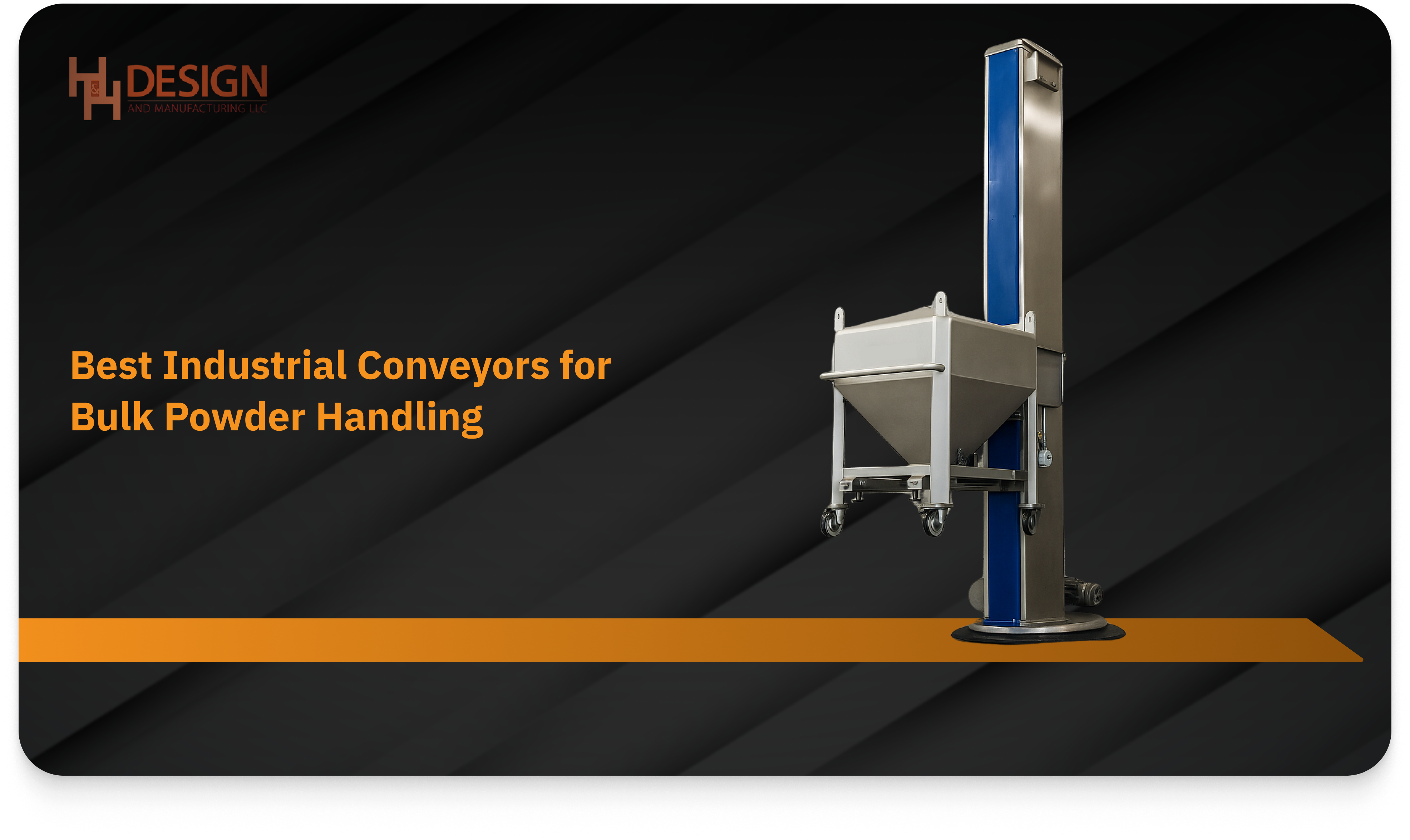
For example, in H&H Design and Manufacturing, the Series 153 Conveyor belt is designed for vertical transfer between the bagging line and the palletizer, also featuring adjustable height settings.
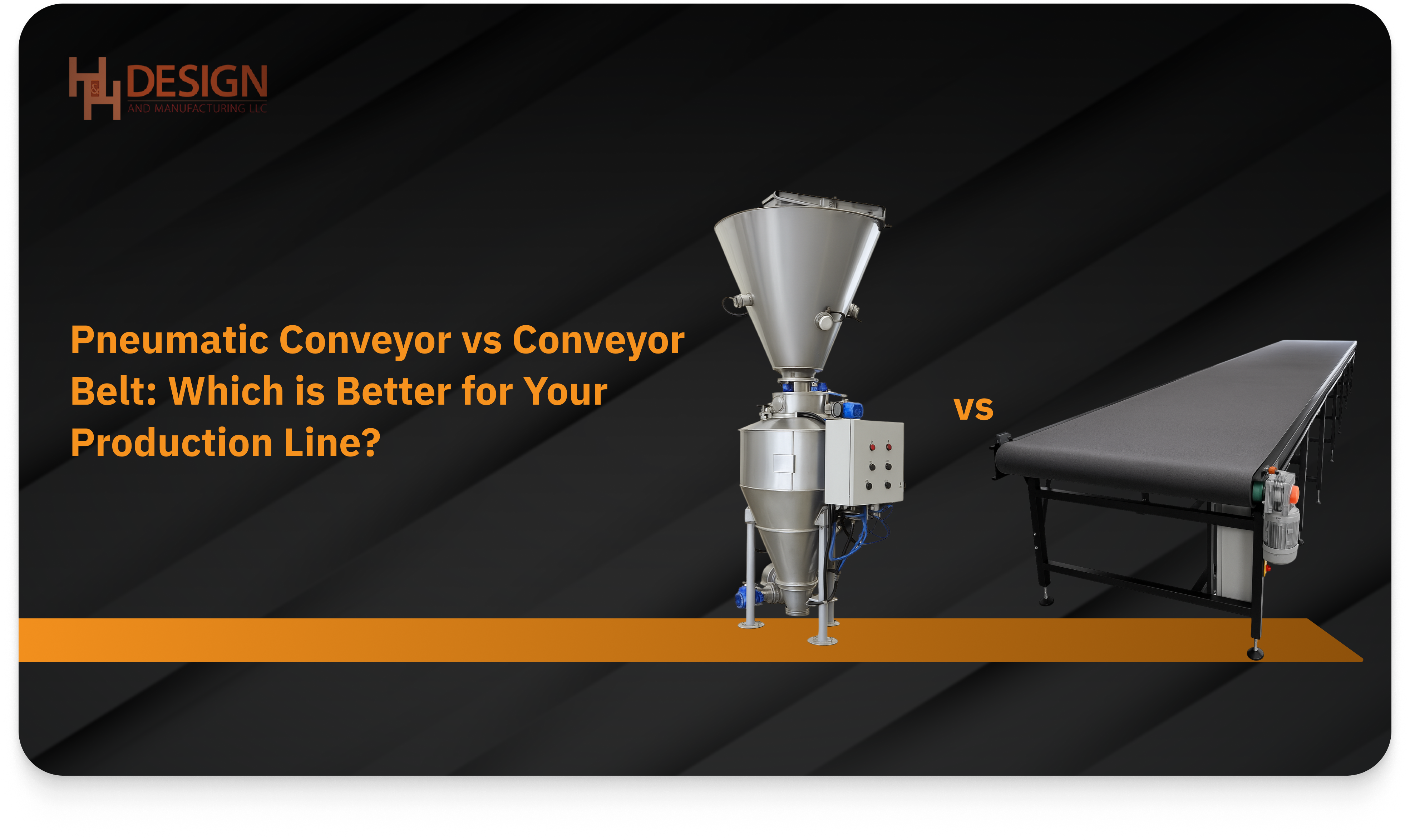
Pneumatic Conveyor vs Conveyor Belt: How Do They Work?
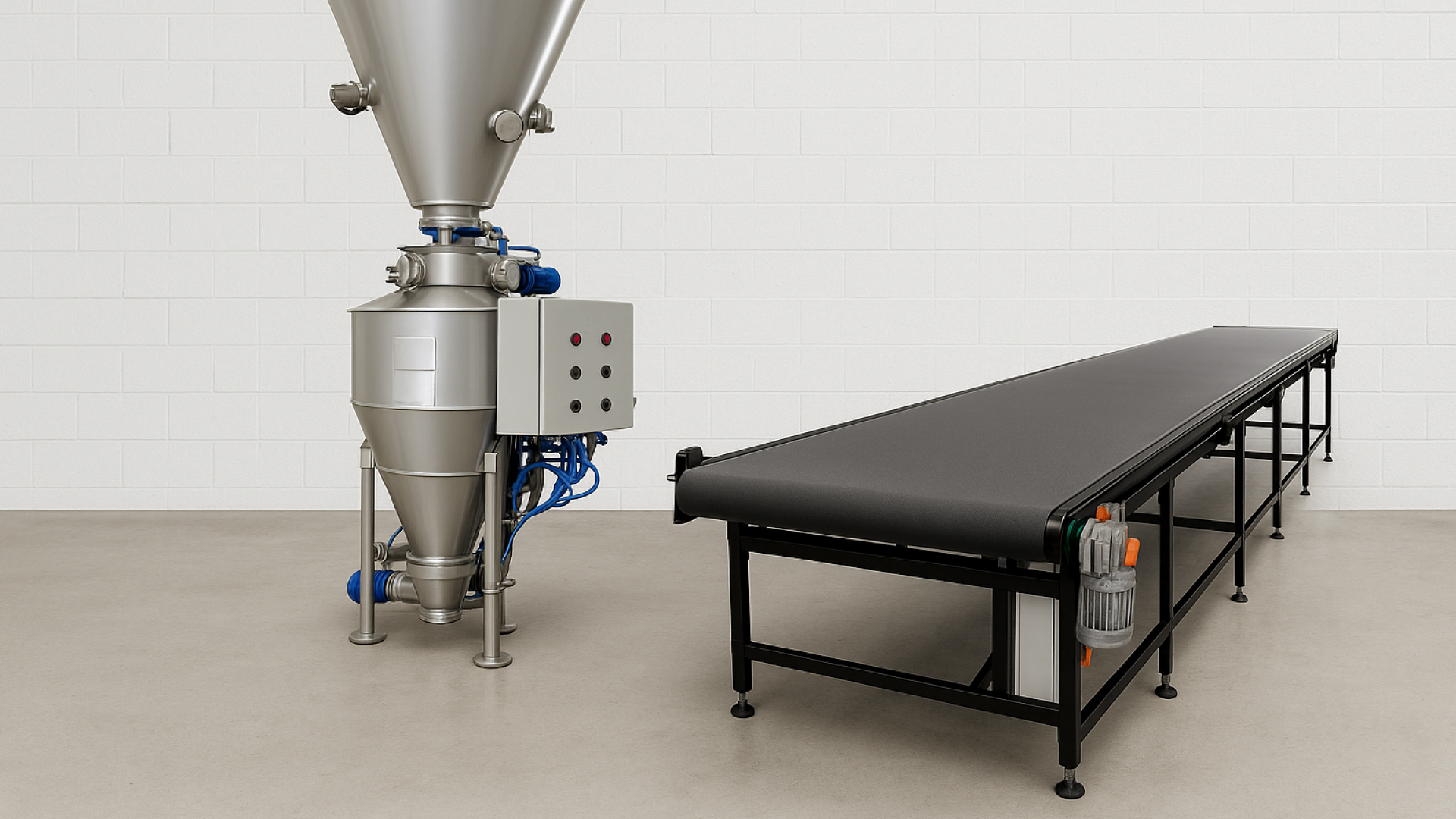
Understanding the working mechanisms of both pneumatic conveyors and belt conveyors will help in optimizing your material handling process. Pneumatic conveyors are ideal for transporting powders or fine granules. Belt conveyors, on the other hand, excel at moving heavy, bulky materials, such as bags or crates.
How Pneumatic Conveyors Work
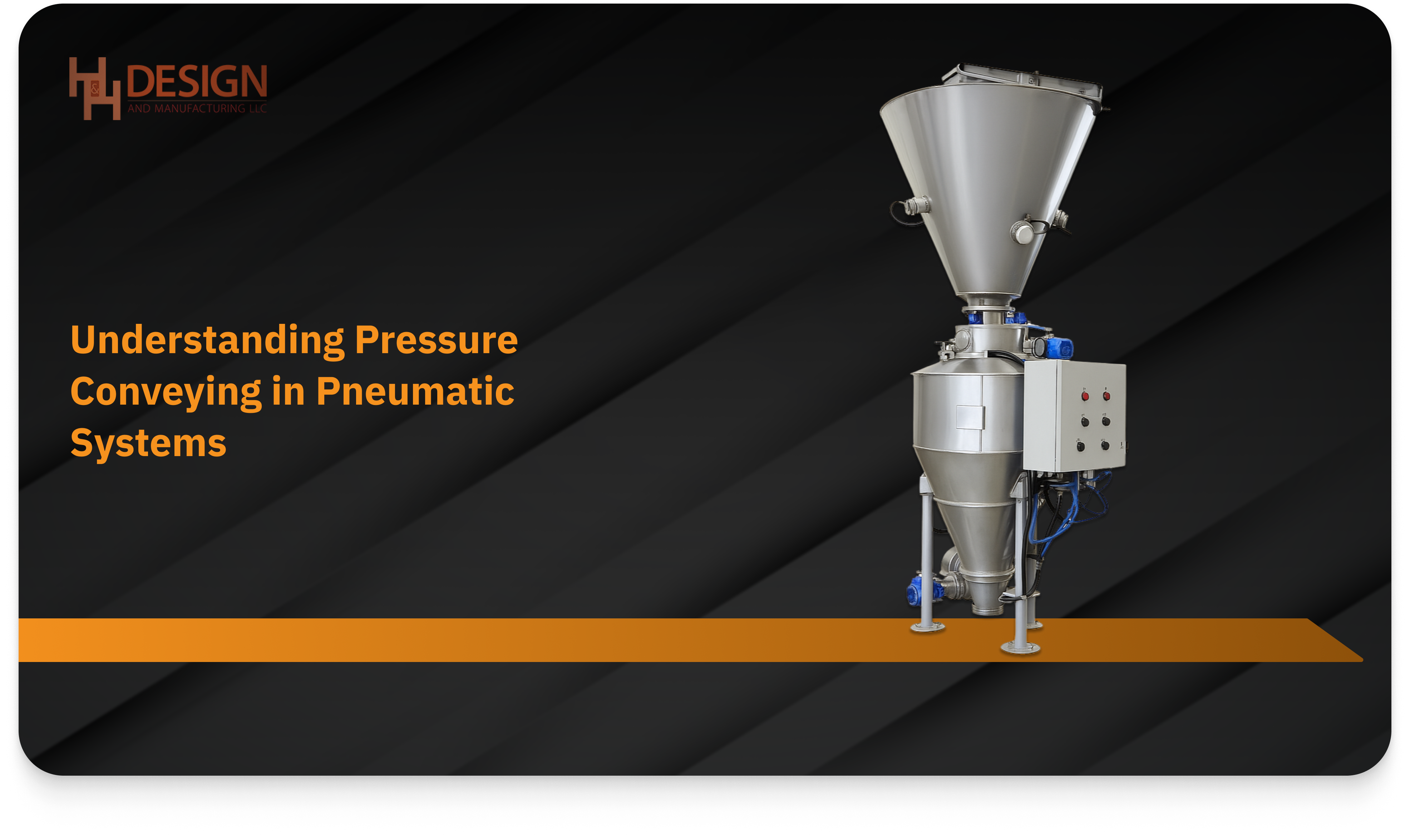
A pneumatic conveyor moves bulk solids (powders, granules, fine particles) through a fully enclosed pipeline by using airflow, generated by a blower or vacuum source, rather than mechanical belts or screws.
The system usually includes a feed inlet (often via a feeder or rotary airlock), a sealed conveying line, and a destination receiver (such as a silo, hopper, or processing machine) where material separates from the air.
Movement is driven by a pressure differential; air/ gas is forced (positive pressure) or drawn (vacuum/ negative pressure) through the pipeline, carrying material along in a gas‑solid mixture.
Depending on the design and material, conveying may occur in a dilute phase (particles suspended in air flow) or a dense phase (particles travel as slugs or plugs, more concentrated).
Because the system is enclosed and uses air as the convey medium, there’s minimal exposure to dust, contamination, or environmental release, thus making it highly suitable for hygienic/dust-sensitive materials.
How Belt Conveyors Work
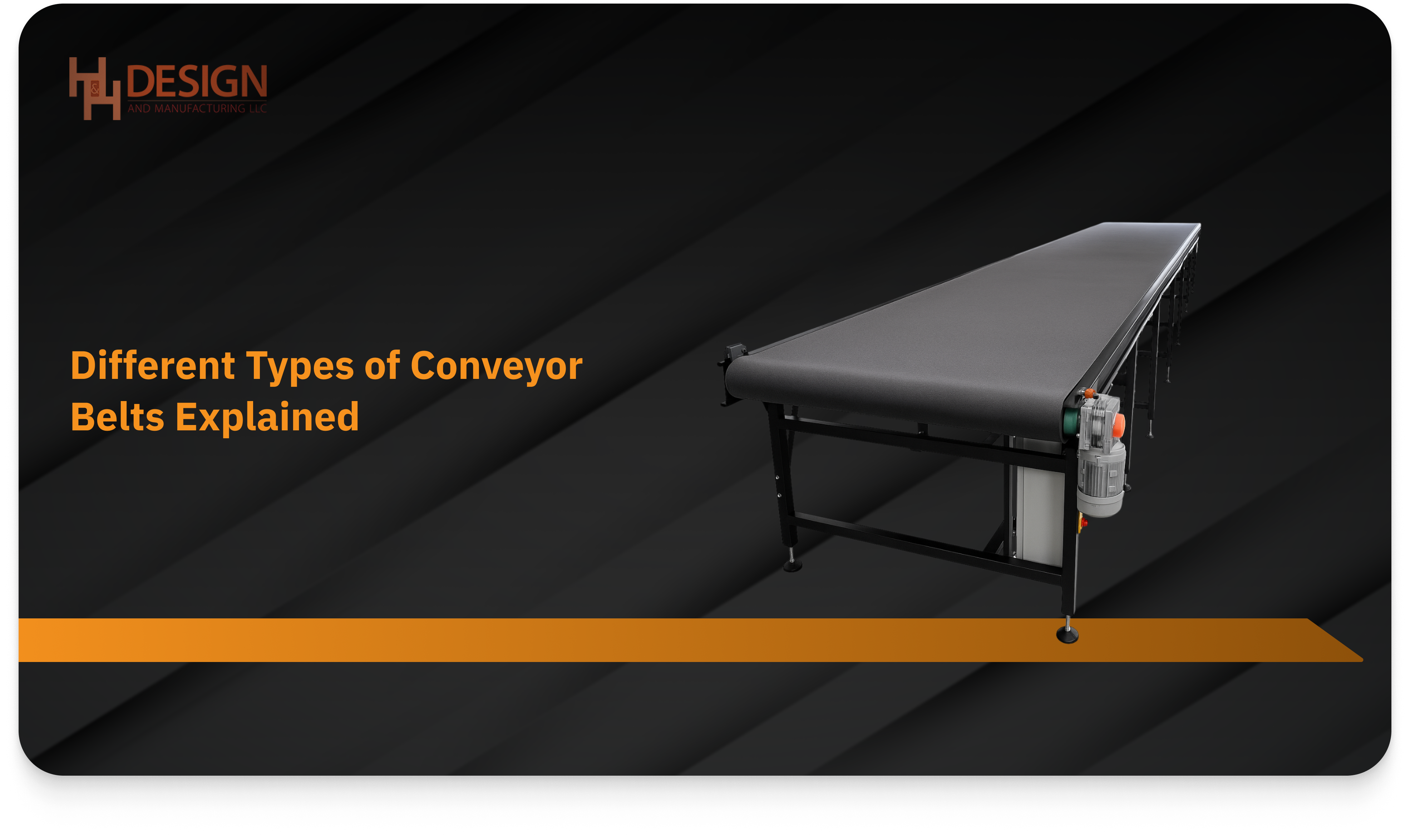
A belt conveyor moves materials using a continuous belt loop, driven by one or more motor‑powered pulleys (drive pulley + idler/tail pulley). The belt runs over a frame or rollers.
When the motor rotates the drive pulley, friction between the pulley and belt causes the belt to move, carrying any material placed on top.
The system’s support comes from idler rollers or a flat bed that holds the belt in position, for a stable transport along horizontal or inclined paths.
Materials like heavy bulk items, bags, crates, and packaged goods ride on the moving belt from point A to B, with minimal containment or enclosure needs.
They require a significant amount of installation space in the production area, thereby increasing the cost. Belt conveyors also expose products to potential external contamination during transport, as they are open systems.
The distinction between air-driven and belt-driven transport becomes even clearer when you look at the variations within each category. Pneumatic systems are split into configurations that handle everything from light powders to dense, abrasive materials
Types of Pneumatic Conveyors
Pneumatic conveyors are generally grouped into three main types — each optimized for different material properties, throughput needs, and plant layouts. Each of these types can operate in either a pressure‑driven (push) or vacuum/suction‑driven (pull) configuration.
Dilute‑phase Pneumatic Conveyor
Material is suspended in a high‑velocity air stream, flowing continuously through pipes. Works well for light, non‑abrasive powders and granules at relatively low bulk density.
Dense‑phase Pneumatic Conveyor
Material moves as concentrated slugs or plugs through the pipe under higher pressure but lower air velocity. This gentle, low‑velocity transport reduces wear and is suitable for fragile, abrasive, or heavy materials.
Semi‑Dense Pneumatic Conveyor
Sits between dilute and dense phases. Offers a compromise of medium material loading and moderate velocity, suitable if your material or process doesn’t fit neatly into “light & fine” or “dense & robust” categories.
Types of Conveyor Belts
Conveyor belts come in various types, each designed to suit different material handling needs. Roller-bed conveyors reduce friction for heavy or rigid items, while flat-belt conveyors are ideal for general transportation of light-to-medium materials.
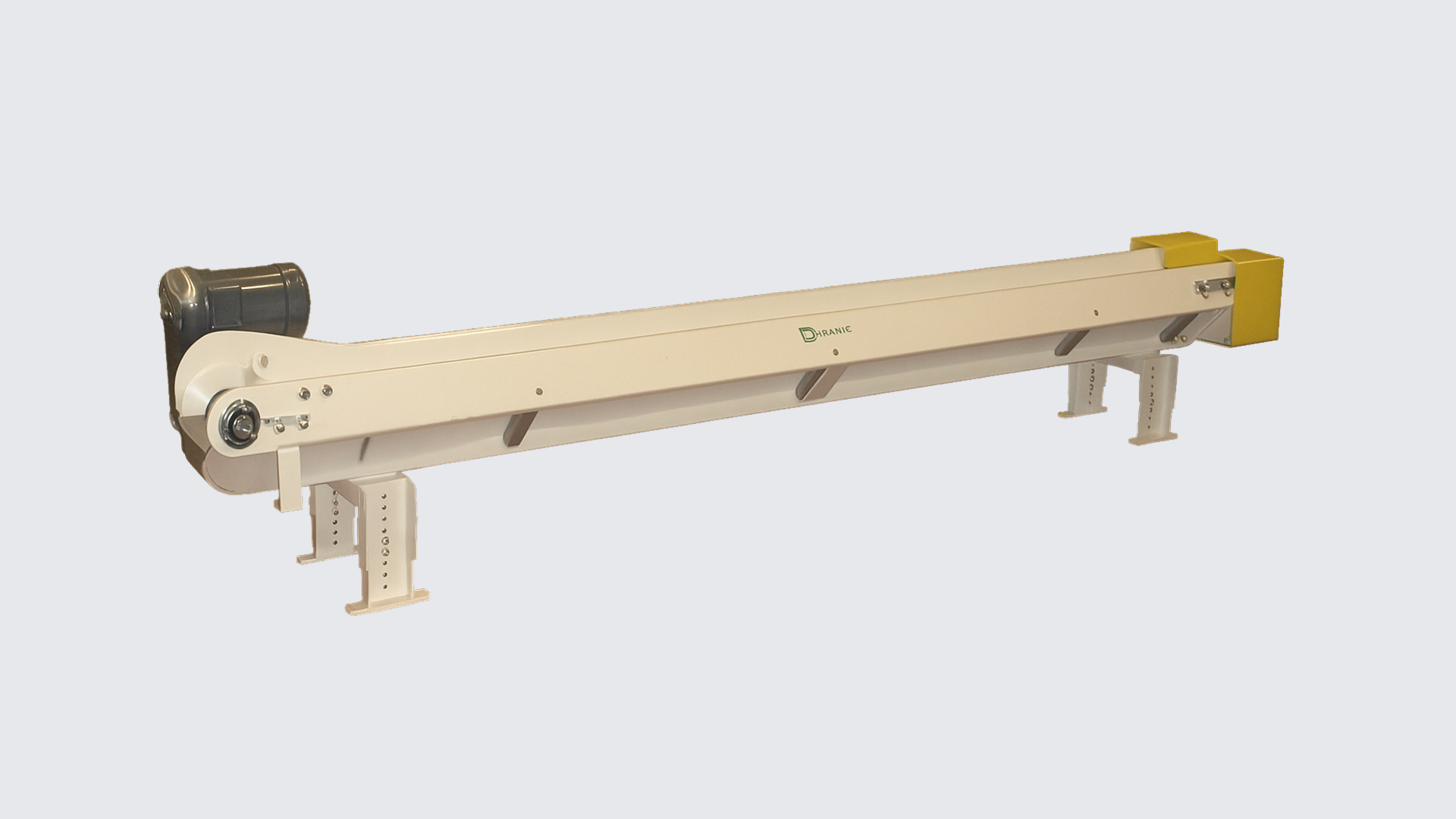
Each type can be customized for specific production needs, for efficient and reliable material flow across the production line.
Roller‑Bed Conveyor Belt
A roller‑bed conveyor supports the material on a series of rollers rather than sliding on a flat surface. That rolling surface reduces friction, making it easier to move rigid items, like boxes, bags, or pallets, over long distances with less energy. For example e.g, H&H’s Series 152 conveyor prevents rolling during transport.
Flat‑Belt Conveyor
Flat‑belt conveyors are the classic, a continuous loop of flexible belt (rubber, synthetic fabric, or similar) that moves over pulleys or rollers. Goods, whether irregularly shaped parcels, light loads, or packaged items, ride directly on the belt from one station to another.
Modular‑Belt Conveyor
Modular‑belt conveyors replace a continuous belt with thousands of interlocking rigid plastic segments. This design handles curves, inclines, and declines better than a flat belt. Damaged segments can be replaced individually rather than scrapping the entire belt, a plus for maintenance and uptime.
Cleated Belt Conveyor
A cleated‑belt conveyor uses a standard belt but adds raised partitions or cleats across its surface. These cleats create compartments or support edges that help carry loose, granular, or bulk materials, especially when the belt must incline, decline, or carry materials that might otherwise slide or spill.
Sandwich / Twin‑Belt Conveyors
A sandwich or twin-belt conveyor consists of 2 parallel belts (top and bottom) that work together to grip and transport materials, so that they stay in place. This design is ideal for handling fragile or irregularly shaped items, preventing slippage or rolling, especially during vertical or inclined transport.
Knowing the types available is one thing; understanding which features actually matter for your operation is another. The real decision comes down to a handful of practical factors that directly impact your line's performance and your facility's bottom line.
Key Features to Compare: Pneumatic Conveyor vs Conveyor Belt
When you’re deciding between a pneumatic system and a belt‑based conveyor for your production line, these are the feature differentiators that matter — beyond just how each works or what types exist. I’m framing these with your ICP (plant managers, process/packaging engineers) in mind.
What Pneumatic Conveyors Bring to the Table?
Space‑efficient & layout‑flexible routing: Pneumatic conveyors use enclosed pipes rather than bulky frames, so they take up less floor footprint and can be routed horizontally, vertically, or around equipment/obstructions without major re‑layout.
Dust control, cleanliness, and contamination resistance: Because material travels in a sealed pipeline (airflow/vacuum), pneumatic systems reduce dust escape, spillage, or external contamination, a big plus for food, pharmaceutical, or dust‑sensitive environments.
Lower maintenance burden and fewer wear parts: With minimal or no moving mechanical parts contacting the material, pneumatic conveyors avoid the frequent belt/roller wear, alignment issues, or spillage cleanup associated with mechanical belts.
Flexible pick‑up and discharge points: You can design pneumatic networks with multiple inlets and outlets, enabling centralized feeding or distribution, useful if your line moves powder or granules from silos to multiple mixers or baggers.
What Conveyor Belt (Mechanical) Systems Offer Better?
Handling heavy, dense, or abrasive materials efficiently: Belt conveyors excel at carrying heavy loads, bulk solids, large packages, filled bags, that pneumatic pipelines would struggle with due to weight, abrasion, or risk of clogging.
Energy and operational efficiency for heavy or continuous loads: For steady flows of heavy material over short to moderate distances, mechanical belts consume less energy per ton compared to pneumatic blowers or vacuum systems.
Simpler sanitary maintenance when dust/wash‑down is not critical: For materials that don’t generate dust or don’t demand airtight transport, e.g, dry granules, abrasive but dry materials, belt conveyors remain cost‑effective.
Better for large volumes and bulk movement over long, straight runs: When the layout is simple, and you need bulk transport (e.g, moving bags, boxes, or heavy loads across the plant), conveyor belts provide reliable high throughput with fewer constraints.
Use pneumatic conveyors when you handle powders, fine or dusty materials, or belt conveyors when you need to move heavy solids, dense materials, bags, or packages. Consider hybrid or mixed systems if your plant deals with a variety of material types.
Why H&H Design & Manufacturing Is the Right Partner for Your Conveyor Solution?
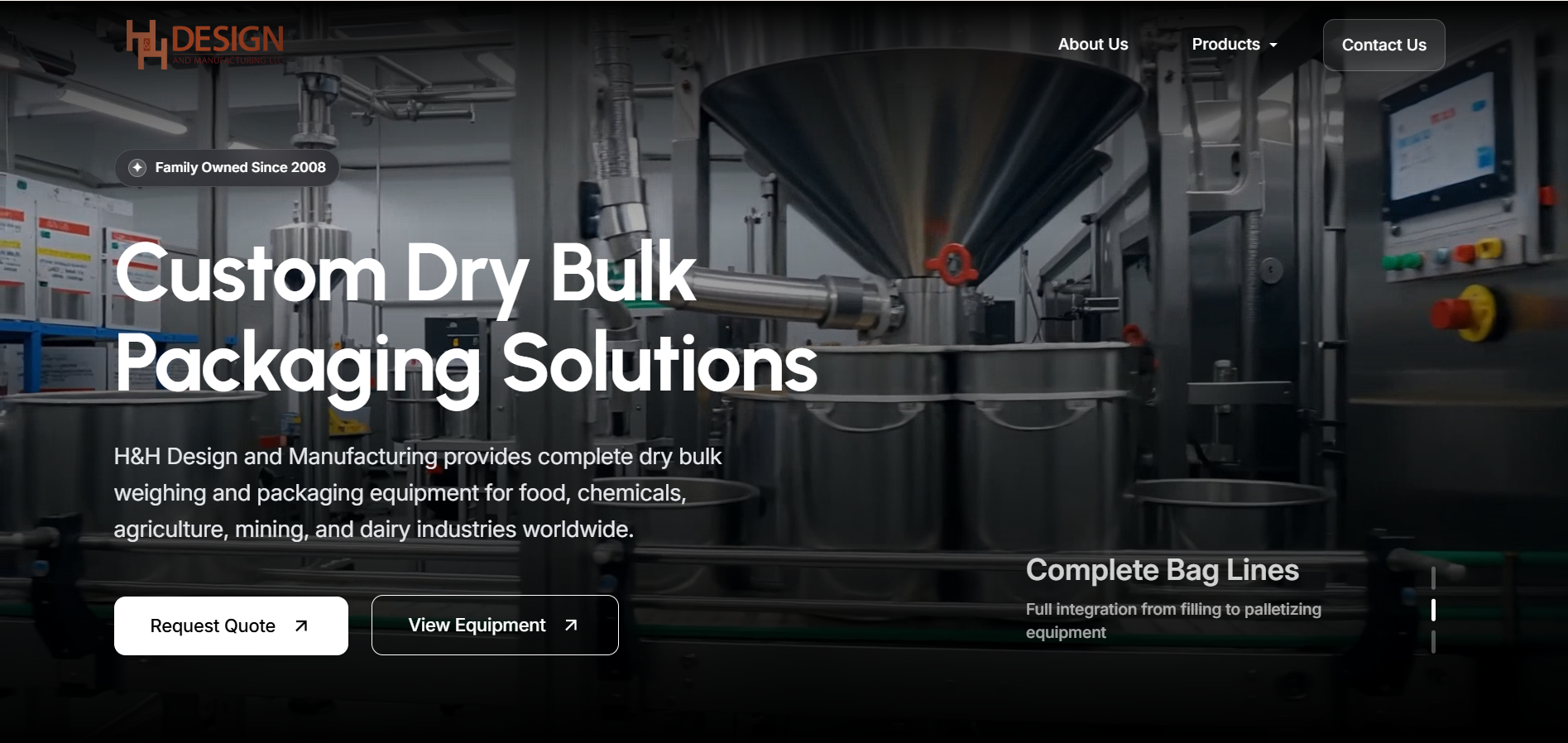
When you’re stuck choosing between pneumatic and belt conveyors, or a hybrid, you don’t just need a vendor, you need a partner who understands how every choice affects uptime, material flow, dust control, and integration with bagging or bulk‑packaging systems. That’s where H&H Design & Manufacturing stands out.
Flexible Conveyor Platforms: H&H’s conveyor catalog covers a range of belt‑based conveyor systems, including incline/decline belt conveyors like dual‑belt compression conveyors like Series 154, and adjustable-height/ speed conveyors such as Series 150 for bag sealing operations.
Custom Material‑Handling Design: Our conveyors are not one‑size‑fits‑all: they can be built with configurations suited for powders, granules, bulk bags, or filled sacks, giving compatibility with your feeding, filling, or packaging operations.
Integration with Bagging & Bulk Packaging Lines: H&H doesn’t just deliver conveyors; we design full systems, including small bag fillers, bulk bag equipment, and downstream equipment.
Custom Engineering & Rapid Turnaround: As a family‑owned OEM with decades of experience, H&H balances capacity for large projects with agility: they can meet tight deadlines and accommodate special requests.
With H&H Design & Manufacturing, you get more than just equipment; you get solutions that integrate with your entire production line.
Conclusion
Choosing between a pneumatic conveyor and a conveyor belt system depends on the material you're handling, your plant's layout, and your specific production needs. Pneumatic conveyors are best suited for lightweight, dust-sensitive, or fine powder materials, offering flexibility, cleanliness, and easy integration into tight layouts.
On the other hand, conveyor belts excel at moving heavy, dense, or bulky materials efficiently over longer distances.
At H&H Design & Manufacturing, we specialize in providing customized conveyor systems tailored to your specific needs.
Contact us today for expert packaging solutions.
FAQs
What is EP and NN in a conveyor belt?
EP (Polyester/Polyamide) and NN (Nylon) refer to the fabric used in the construction of the conveyor belt. EP belts offer high tensile strength, durability, and are resistant to wear, while NN belts are designed for higher flexibility and impact resistance, making them ideal for heavy-duty applications.
How thick is a 5-ply conveyor belt?
A 5-ply conveyor belt typically has a total thickness ranging from 8 to 12 millimeters, depending on the material used for the plies and the belt’s application. The individual plies are made of fabric or steel reinforcement layers.
How can you improve conveyor efficiency?
Conveyor efficiency can be improved by optimizing speed settings, using properly maintained belts and rollers, minimizing system downtime, and implementing regular cleaning and monitoring to prevent clogs and reduce wear.
What is MPA in a conveyor belt?
MPA stands for Mega Pascals, a unit of measure for the tensile strength of a conveyor belt. It indicates the belt's ability to withstand forces without stretching or breaking, ensuring durability under heavy load conditions.
What is the capacity of a pneumatic conveyor?
The capacity of a pneumatic conveyor depends on the system design, material type, and airflow, typically ranging from a few hundred kilograms to several tons per hour, with higher capacity systems used for larger, bulk materials or longer distances.