Every hour of downtime in your packaging line can cost your business more than just lost production. A 2025 study showed that automating workflows, including packaging and line automation, can boost productivity by around 20%, leading to better efficiency and resource utilization.
When you rely on manual filling systems, inconsistent fill levels, frequent maintenance, and higher labor costs are inevitable. These inefficiencies slow down your operations and increase costs over time.
The solution? An Automatic Filling System. With the right filling system tailored to your materials, containers, and production needs, you can achieve faster, more consistent fills, minimize waste, and scale your production line efficiently.
In this blog, we’ll explore how automatic filling works, its benefits, and how to choose the right system for your production line.
Key Takeaways
Streamlined Workflow: Automatic filling systems automate container detection, alignment, filling, and post-filling processes, reducing manual intervention and boosting efficiency.
Precision and Consistency: Advanced filling mechanisms (piston fillers, volumetric pumps, augers) ensure accurate, repeatable fills, minimizing product waste and enhancing consistency.
Versatility and Flexibility: These systems handle various materials (liquids, powders, granules) and container types with easy adjustments for quick changeovers, adapting to different production needs.
Hygiene and Safety: Designed with sanitary features, automatic filling systems minimize contamination risks, making them ideal for food, pharma, and chemical industries.
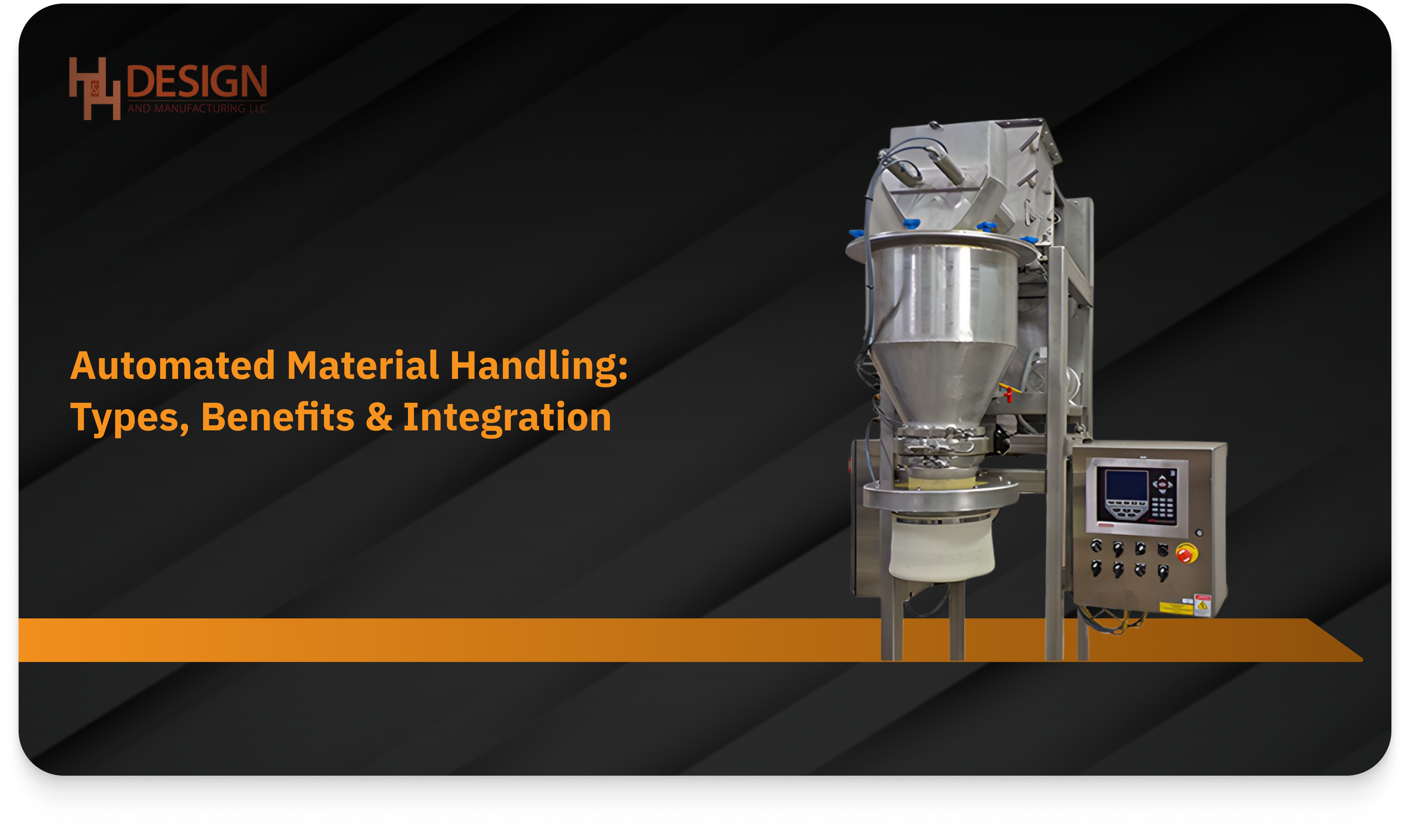
H&H Series 330E: The Series 330E offers automation capabilities like adjustable bag frames and PLC-based controls, ensuring precise, high-speed filling of bulk bags with minimal manual intervention.
What is an Automatic Filling System?
An Automatic Filling System is a type of machinery used to fill containers (such as bottles, pouches, cans, or drums) with a precise amount of material, whether liquid, powder, granules, or semi-solids, without the need for manual intervention.
These systems use automated mechanisms such as pistons, valves, and nozzles to deliver consistent and accurate filling, while minimizing waste and human error.
Automatic filling systems are commonly used in industries such as food and beverage, agriculture, pharmaceuticals, and chemicals to ensure efficiency, hygiene, and product consistency.
Benefits of the Automatic Filling System
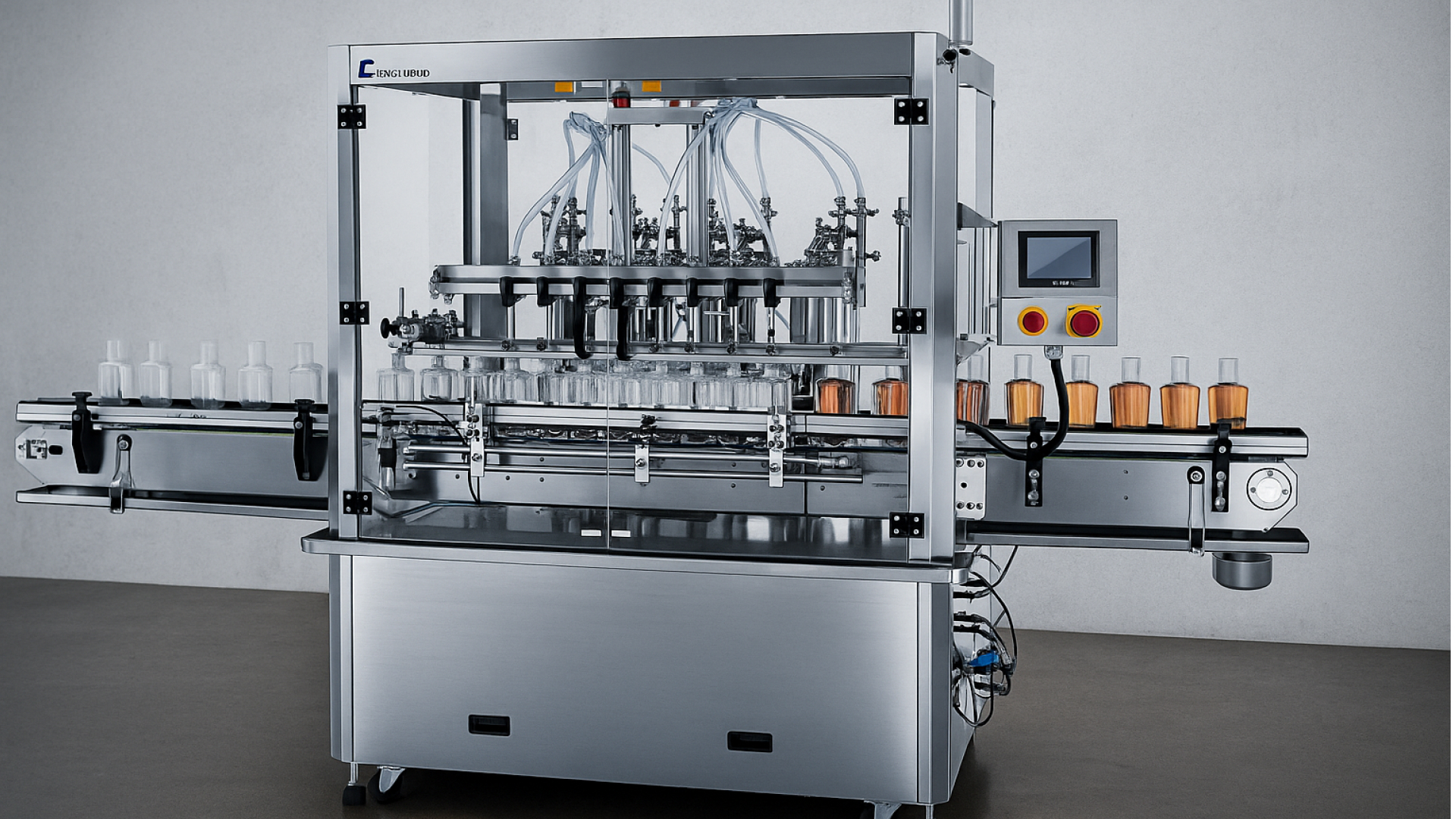
By adopting automatic filling systems, plant managers can improve overall production reliability, reduce maintenance costs, and optimize labor use. The benefits will help you select the right system for your facility’s specific needs.
Improved speed and throughput: Automatic filling systems dramatically accelerate the filling process compared to manual filling, enabling high‑volume output and consistent flow.
Consistent accuracy and minimized waste: They deliver precise fill volumes (liquid, powder, or granule), reducing overfilling, under‑filling, and product giveaway, which improves yield and reduces material waste.
Lower labor and operating costs: Because automation reduces or eliminates manual intervention, labor costs drop and the risk of human error decreases, which is valuable in high-throughput or 24/7 operations.
Better hygiene, safety, and compliance: Automatic systems reduce human contact with the product and support sealed or sanitary filling, which is important in food, pharma, chemical, or dust‑sensitive manufacturing.
Flexibility and scalability: Modern filling machines support many product types (liquids, powders, granules, semi‑solids), container sizes, and throughput rates so that manufacturers adapt quickly when demand or SKUs change.
Increased operational stability and reliability: With intelligent controls, modular build, and precise dosing mechanisms, automated filling systems maintain consistent output, reduce variation, and require less frequent intervention.
These advantages stem from sophisticated engineering and intelligent design. To appreciate why automatic filling systems deliver such consistent results, it helps to understand the mechanics behind each fill cycle.
If you’re evaluating bulk‑bag filling systems with automation in mind, H&H Design and Manufacturing, Series 330E is designed for “higher automation capability,” which reduces manual loading/unloading, minimizes operator dependency, and supports continuous operation for large‑scale packaging or bulk filling lines.
How Automatic Filling Systems Work
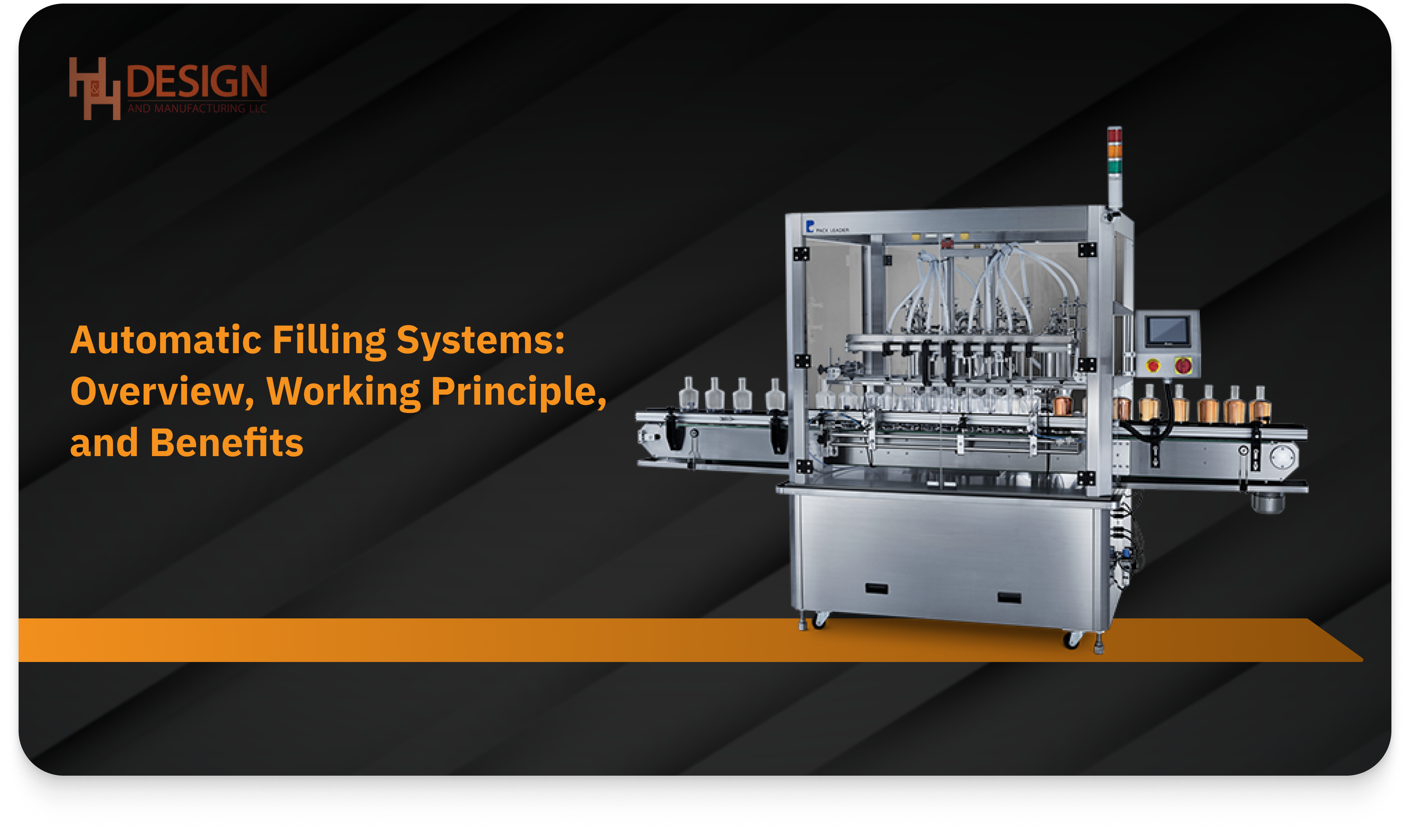
An automatic filling system is an integrated solution designed to automate the process of dispensing materials (liquids, powders, granules, or pastes) into containers such as bottles, pouches, bags, or drums.
These systems work through a combination of sensors, mechanical components, and precision controls, making them suitable for large-scale operations. Below is a detailed explanation of how these systems function:
Container Detection and Alignment
The process begins as containers are placed on a conveyor system. Sensors, such as photoelectric or proximity sensors, detect the presence of containers and ensure they are correctly aligned for filling. The system uses automated guiding mechanisms to move each container into the designated filling position, so that consistent spacing and alignment are maintained.
Product Dispensing / Filling Method
Depending on the product (liquid, powder, granule, paste), the system selects an appropriate filling method:
Volumetric / Gravity / Pump Filling: common for free‑flowing liquids or low-viscosity fluids. The system measures volume or uses controlled gravity/pressure to dispense product.
Piston / Gear‑Pump / Vacuum Filling: for higher-viscosity liquids, suspensions, or creams where flow must be controlled carefully. A piston or pump draws product into a chamber, then dispenses a precise volume into the container.
Powder / Solid Fillers — for powders, granules, or particulate solids: auger fillers (like H&H’s Series 54 dual auger small bag fillers), volumetric powder fillers, or volumetric cup/rotary fillers meter out the correct volume/weight while minimizing dust and ensuring container fill accuracy.
Fill Verification and Quality Control
Many automatic filling systems include a feedback loop with load cells or weight-based verification so that the correct amount of product is dispensed. This will provide fill accuracy and help prevent over- or under-filling. The system can automatically adjust to achieve a precise fill by continuously monitoring the weight or volume of the material dispensed, maintaining product consistency, and minimizing waste.
Post-Filling Operations
After filling, many systems are integrated with additional downstream equipment for capping, sealing, labeling, or checking for contamination. For instance, once a container is filled, it may move down the line to a capper, where caps are automatically applied and securely sealed.
Labeling systems then apply pre-designed labels, and make sure the product is properly branded and identified before it leaves the packaging line.
Dust and Contamination Prevention
For powders and sensitive materials, these systems are often designed with enclosed filling heads or dust-tight systems to minimize exposure to airborne particles. The use of static control, proper containment methods, and integrated dust collection systems ensures that fine powders are managed safely, preventing contamination of the product and the environment.
Automation and Control
All these steps are managed by a centralized control system, usually a PLC (Programmable Logic Controller) or HMI (Human-Machine Interface), which automates and monitors the filling process. Sensors track various parameters such as container presence, filling volume, product type, and even error detection.
This level of automation allows for greater precision, higher throughput, and minimal manual intervention, which is beneficial for high-volume production lines.
Cleaning and Changeovers
Automatic filling systems also come with self-cleaning mechanisms or quick-change parts to facilitate cleaning between batches, maintaining compliance with hygiene standards and reducing downtime for product changeovers. Sanitary design is crucial, particularly in the food, pharma, and cosmetics industries, where hygiene and contamination prevention are paramount.
The process may seem complex, but modern filling systems are built around specific capabilities that make this level of automation practical and reliable. Focus on these features when comparing equipment for your facility.
Key Features of Automatic Filling Systems
When you evaluate an automatic filling system, certain features define whether it will perform reliably, efficiently, and flexibly for your production needs. Here are the most important features, explaining how modern filling systems are designed.
Automated Container Handling & Sensing: Sensors detect containers and prevent filling until properly positioned, minimizing spills, waste, and safety hazards.
Precise Filling Mechanism: Uses piston fillers, volumetric pumps, or auger systems for accurate, repeatable fills, reducing underfills, overfills, and product giveaway.
High Throughput & Multi-Head Filling: Multi-head configurations (2–16 heads) enable simultaneous filling, boosting speed, and maintaining consistency.
Flexible Adjustments & Quick Changeovers: PLC-based controls allow easy adjustments for fill volume, container size, and speed, leading to minimal downtime during product changes.
Hygiene, Containment & Sanitary Construction: Built from stainless steel and equipped with CIP options, cleanliness, and compliance with hygiene standards.
Integrated Process Controls & Smart Automation: Digital controls and interlocks ensure smooth integration with upstream/downstream systems for end-to-end automated operation.
Versatility & Multi-Product Capability: Handles a wide range of materials (liquids, powders, granules) and containers (bottles, drums, pouches), maximizing system utilization.
While many manufacturers offer filling equipment, not all systems are built with the same commitment to automation, precision, and long-term reliability. H&H Design & Manufacturing has developed solutions that address the specific challenges of bulk material handling.
Why H&H Design & Manufacturing is the Right Partner for Automation in Your Packaging Line
H&H Design & Manufacturing offers automation-ready bulk filling solutions, specifically engineered for industries where speed, precision, and scalability matter.
Series 330E: With automated features such as adjustable bag frames and seamlessly compatible with powered conveyor systems, the 330E provides precise and consistent filling of bulk bags, reducing downtime and manual intervention.
Series 110DS: With features like advanced pneumatic inflation and an inflatable seal for air-tight connection, it is a superior automated system for handling fine powders with minimal operator involvement and improved throughput.
Series 40: H&H’s bulk bag equipment is designed for efficient FIBC filling and re-bagging operations, making it an ideal choice for facilities requiring flexible bulk material handling with a low automation setup.
Series 2000: Built for bulk materials, this top-tier automation series features PLC-based controls, offering intelligent operation management with a user-friendly interface and customizable programming to suit various industrial applications.
From understanding the fundamentals to evaluating specific features, you now have a framework for making a decision about automatic filling systems. The key is matching your production requirements with equipment that delivers measurable improvements in speed, accuracy, and operational efficiency.
Conclusion
Automatic filling systems are the backbone of modern packaging operations, providing faster, more accurate filling while minimizing waste, downtime, and labor costs. From precise dosing mechanisms to multi‑head filling setups, these systems offer enhanced throughput, better hygiene, and scalability for high‑volume production lines. The integration of automated controls further ensures consistency, reliability, and compliance with industry standards.
H&H Design & Manufacturing offers a wide range of automation‑ready bulk filling solutions. Systems like the Series 330E, Series 110DS, and more provide minimal manual intervention, faster changeovers, and integration with your existing equipment.
Contact us today for expert packaging solutions!
FAQs
What is the principle of the automatic liquid filling machine?
The principle of an automatic liquid filling machine is to accurately dispense liquid into containers using a volumetric or gravimetric system. It measures the liquid either by volume or weight and fills the container automatically, ensuring consistency and reducing waste.
What is an automatic capsule filling machine?
An automatic capsule filling machine automatically fills empty capsules with powdered ingredients or granules. It uses precision mechanisms to separate, fill, and close capsules at high speeds, improving efficiency and consistency in pharmaceutical production.
How does an automatic filling loop work?
An automatic filling loop uses a closed circuit system where product is continuously cycled through the machine, filling containers at set intervals. It typically includes sensors and valves to control the flow and ensure precise amounts of material are dispensed into each container.
What is a semi-automatic filling machine?
A semi-automatic filling machine requires some manual intervention, such as placing containers or starting the cycle. It automates the actual filling process, providing efficiency improvements over fully manual methods while still needing human oversight for some tasks.
How does an aseptic filling machine work?
An aseptic filling machine maintains a sterile environment by using high-temperature steam to sterilize containers and filling equipment before introducing the product. This ensures the product, often in the food or pharmaceutical industries, remains uncontaminated during the filling process.