The global bulk material handling system market was valued at $48.9 billion in 2024, and is projected to grow substantially over the coming decade. For industries dealing with bulk materials like powders, granules, and aggregates, this strong market growth signals rising demand for reliable storage and handling systems.
However, with a wide range of equipment available, from conveyors and bucket elevators to silos and reclaimers, choosing the right solution can be overwhelming.
In this article, we will explore the main types of bulk material handling systems, discuss their uses, and help you learn how to select the best equipment for your specific operational needs.
Key Takeaways
Bulk material handling refers to moving, storing, and controlling large quantities of materials like powders, granules, and ores, essential for industries such as food, chemicals, and mining.
Conveyor systems and bucket elevators are key types of equipment that help move materials efficiently, reducing manual labor and increasing throughput.
Silos, hoppers, and bins provide storage solutions, ensuring materials are kept organized and protected, improving inventory management.
Challenges like dust control, material degradation, and uneven flow can be managed with the right equipment, such as enclosed conveyors and automated reclaimers.
Partnering with H&H Design Manufacturing provides tailored, integrated bulk material handling systems that improve efficiency, reduce downtime, and ensure seamless material flow across your operation.
What is “Bulk Material Handling”?
Bulk material handling refers to the process of moving, storing, and controlling large quantities of loose materials, such as powders, granules, grains, and ores, within a facility. These materials are typically handled in bulk form rather than individual units, making them essential for industries like food processing, chemicals, agriculture, and mining.
In simpler terms, bulk material handling systems are designed to manage the flow of materials from one point to another, from storage to processing, packaging, or shipping. This includes equipment that can transport, store, and discharge materials efficiently while maintaining product quality and minimizing waste.
Why It Matters:
Effective bulk material handling is vital for several reasons:
Throughput: It ensures smooth, continuous movement of materials, reducing delays and keeping production lines running efficiently.
Safety: Proper handling of equipment can minimize the risk of accidents, particularly when dealing with hazardous or heavy materials.
Inventory Control: Helps maintain accurate stock levels and prevent material shortages, ensuring that production processes are never interrupted.
Reducing Manual Labor: Automating the movement and storage of bulk materials significantly reduces the need for manual labor, lowering operational costs and improving workforce safety.
With the basics covered, let’s take a closer look at the main types of bulk material handling equipment and how each serves its distinct purpose in modern manufacturing operations.
Types of Bulk Material Handling Equipment & Their Uses
Bulk material handling equipment plays a crucial role in managing the flow of materials in industrial processes. The right equipment ensures the continuous movement, storage, and control of bulk materials, contributing to a smoother operation, lower labor costs, and better productivity. Below are some of the key types of equipment used in bulk material handling.
Conveyor Systems
Conveyor systems move material either horizontally or on inclines and declines, helping transport bulk materials across different areas of a plant. These systems are vital for linking various points, including storage, processing, and packaging areas, and feeding materials between processes.
Typical Uses:
Moving powders, granules, and aggregates through production lines.
Linking storage to processing or packaging lines.
Integrating with bagging or bulk bag filling lines for continuous material flow.
Benefits:
Reduces manual handling: Automates material movement, reducing the need for labor.
Supports continuous flow: Keeps materials moving without stoppages, enhancing throughput.
Bucket Elevators
Bucket elevators are designed to lift bulk materials vertically using a series of buckets attached to a belt or chain. These elevators are ideal when space is limited or when materials need to be raised to higher levels, such as storage silos or hoppers.
Use Cases:
Lifting materials to storage silos, hoppers, or processing lines.
Elevating granular or powdered materials like grains, feed, and chemicals.
Advantages:
Efficient vertical transport: Moves materials upward where space is constrained.
Controlled discharge: Discharges materials at precise locations, minimizing spills or contamination.
Minimal material degradation: For the right bucket type, vertical movement can reduce product damage.
Storage Systems
Storage systems like silos, hoppers, bins, and stockpiles are used for storing bulk materials before they are processed or packaged. These systems are designed to keep materials organized, protected, and easily accessible.
Use Cases:
Storing raw materials such as grain, flour, chemicals, and minerals.
Buffering materials before they are sent to the packaging line.
Managing inventory and ensuring a consistent material supply for production.
Benefits:
Bulk storage: Efficiently holds large quantities of material, reducing the need for frequent handling.
Better inventory management: Helps track stock levels and avoid shortages.
Protection from contamination: Proper design and sealing help protect materials from contaminants.
Stackers, Reclaimers, Dumpers/Unloaders
Stackers are used to build stockpiles of materials, while reclaimers retrieve these materials from stockpiles and feed them back into the production process. Dumpers or unloaders are used for handling materials coming from trucks, railcars, or bags, preparing them for storage or processing.
Use Cases:
Used in mining or mining-like operations for ores, minerals, and other bulk raw materials.
Handling bulk raw materials coming from shipments (e.g., truckloads, railcars) for input storage.
Benefits:
Automated stacking/reclaiming: Reduces manual labor, improving productivity and safety.
Better throughput: Ensures a consistent supply of material to production lines.
Safer handling: Helps safely manage large quantities of bulk material.
Small Bag Filling Equipment
Small bag fillers are designed to fill bags, pails, or boxes with powders, granules, and other bulk materials. These systems are crucial for industries that require standard-sized packaging for consumer or intermediate products.
Typical Uses:
Packaging food ingredients (e.g., flour, starch, sugar).
Filling smaller bags for chemicals, additives, and other granular materials.
Suitable for plants dealing with smaller quantities and standardized packaging sizes.
Benefits:
Accurate filling: Ensures precise portioning and consistent bag weights.
Reduces labor: Automates the filling process, minimizing human error and labor costs.
Dust control: Helps prevent dust exposure during the filling process.
Bulk Bag Equipment
Bulk bag equipment is used for filling and unloading large containers, like FIBCs (Flexible Intermediate Bulk Containers), also known as super sacks, which are essential for handling bulk materials in large volumes.
Typical Uses:
Filling and unloading large volumes of materials, such as grains, chemicals, or minerals.
Handling high-capacity materials in industries like agriculture, food processing, and chemicals.
Benefits:
Efficient handling of high-volume bulk materials.
Reduces handling time and labor costs compared to smaller bag systems.
Ensures controlled discharge and dust-free filling to maintain product quality.
Not every production line handles bulk materials the same way. That’s why H&H Design & Manufacturing offers both standard and fully customized equipment, such as the Series 200X Bulk Bag system, built for food, chemical, plastics, agriculture, and other material-sensitive sectors.
Now, let’s look at how the right equipment helps solve the most common challenges in bulk material handling.
Common Challenges in Bulk Handling & How Proper Equipment Helps
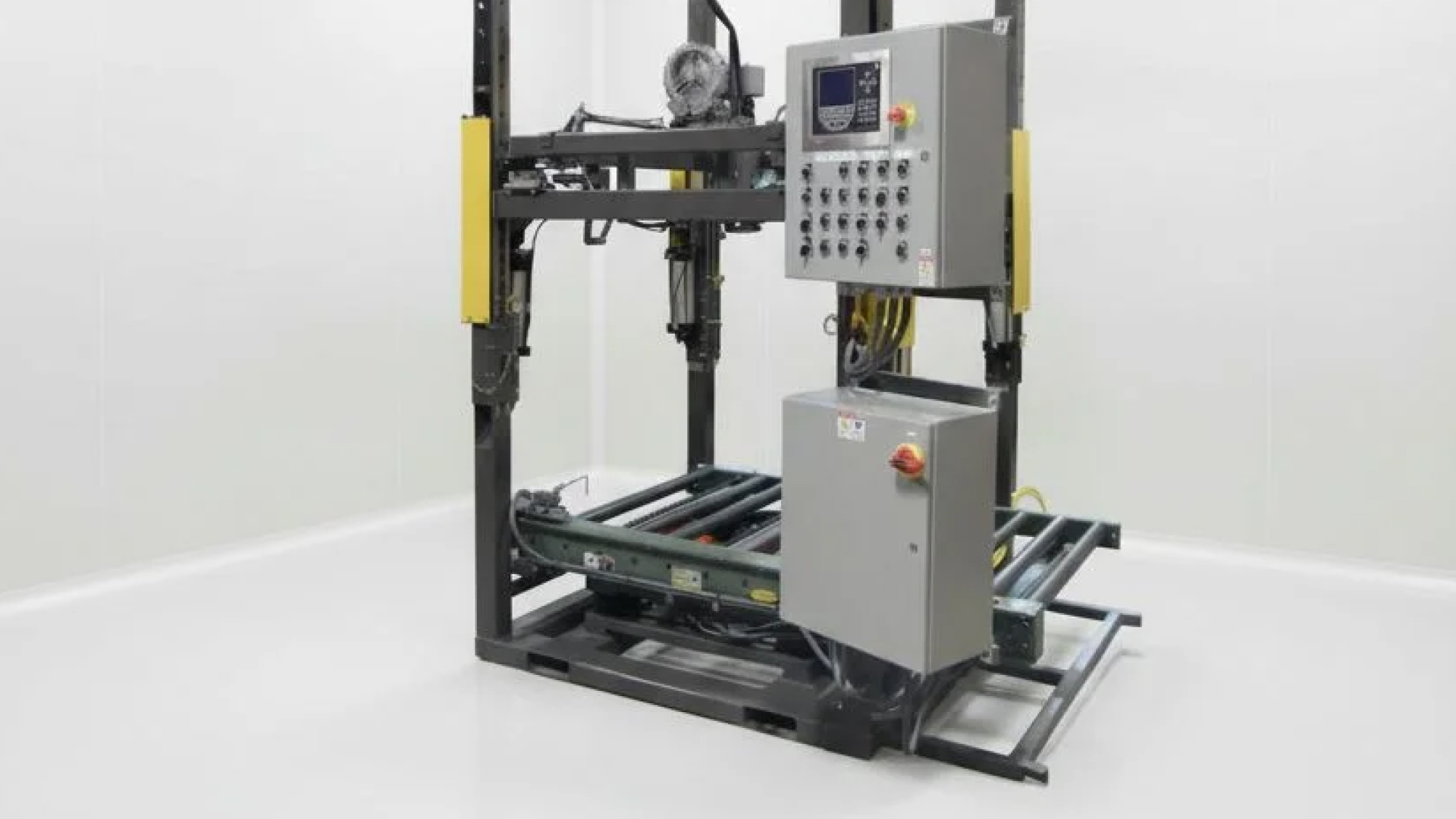
Bulk material handling often comes with a set of unique challenges that can impact efficiency, safety, and product quality. These challenges not only slow down production but also increase operational costs. Below are some of the most common issues faced by manufacturers and how the right equipment can help address them.
Dust Control
Bulk materials like powders and grains tend to generate dust, which can not only create a hazardous environment but also affect the quality of the product, especially in food or chemical industries.
Enclosed conveyors and vacuum systems can significantly minimize dust creation during material movement, reducing environmental risks and maintaining product integrity, especially in food or chemical industries.
Material Degradation
Rough handling, friction, or improper storage conditions can cause bulk materials to degrade, which leads to loss of product quality and increases waste.
Equipment like bucket elevators and closed-loop systems ensures that materials are transported gently and stored in appropriate conditions to minimize degradation. For instance, silos and hoppers with proper discharge systems maintain material quality and reduce breakage.
Uneven Material Flow
Materials can sometimes flow unevenly, especially powders or granules, leading to clogging, backups, and inefficiencies on the production line.
Vibratory feeders and auger conveyors can help ensure consistent, smooth material flow, reducing stoppages and material buildup in storage and processing systems.
Manual Labor Bottlenecks
Manual loading, unloading, and handling of bulk materials can be time-consuming and prone to human error, which results in delays, downtime, and higher labor costs.
Automated systems like unloaders, reclaimers, and conveyors can replace manual labor for loading and unloading, which reduces bottlenecks and enhances productivity.
Downtime from Manual Loading/Unloading
Manual operations often lead to unpredictable downtime, affecting the overall production flow and leading to lower throughput.
Automated systems like integrated bagging lines, bucket elevators, and reclaimers help ensure that materials move continuously with minimal interruptions, reducing downtime and improving throughput.
Contamination Risk
Improper handling can lead to material contamination, especially for industries like food processing and chemicals, where contamination risks are high.
Sealed systems (e.g., enclosed conveyors and pneumatic systems) help maintain material integrity by reducing contamination risks, ensuring products are clean and meet industry standards (especially in food and chemical sectors).
How to Choose the Right System for Your Operation
Choosing the right bulk material handling system involves considering several factors that directly impact your plant's efficiency and operational costs. Each material type, throughput requirement, and facility layout demands a tailored solution to ensure smooth and continuous material flow. The following table highlights the key factors to consider when selecting equipment and why each factor matters for your operation.
Factor | Key Considerations | Recommended Equipment | Why it Matters |
Type of Material | Powder, granules, abrasive, or sticky materials? | Enclosed conveyors, bucket elevators, drag conveyors | Different materials require different systems: enclosed conveyors for powders and drag conveyors for heavy, abrasive materials. |
Throughput Requirements | How much material do you need to move per hour? | Belt conveyors, screw conveyors, drag conveyors | Higher throughput needs robust equipment to maintain a continuous flow and minimize downtime. |
Available Space | Is space limited vertically or horizontally? | Vertical conveyors, bucket elevators, belt conveyors | Vertical systems save space, while horizontal systems are better for longer distances. |
Storage Volume | How much material needs to be stored at once? | Silos, hoppers, bins | Large materials require systems like silos or bins for bulk storage before processing or packaging. |
Material Flow | Do you need continuous or intermittent flow? | A combination of conveyors, elevators, and reclaimers | Smooth flow is key to avoiding downtime. Integration of different systems ensures continuous material movement. |
Dust & Contamination | Is dust control or contamination a concern? | Enclosed conveyors, vacuum systems | Dust-proof systems are needed for powders and materials that must remain uncontaminated (especially in food or chemical industries). |
Maintenance & Labour | How easy is the system to maintain and operate? | Easy-to-maintain conveyors or elevators | Equipment that’s easy to operate and maintain reduces downtime and lowers overall labor costs. |
How a Partner Like H&H Design & Manufacturing Fits In
When you’re investing in a bulk material handling system, the wrong partner can leave you with equipment that doesn’t match your material, throughput, or footprint—leading to constant tweaks, unplanned downtime, and higher operating costs.
H&H Design & Manufacturing is a family-owned OEM that specialises in dry-bulk weighing, filling, and conveying systems. Since 2008, they’ve been designing and building equipment that helps plants move, store, and package powders, granules, and abrasive bulk solids efficiently and reliably.
Tailored Systems for Your Material and Process
H&H’s engineering team designs around your specific material and application, not a one-size-fits-all template. They work with:
Small bag fillers (Series 52, 54, 55, 61, 70) for food ingredients, chemicals, minerals, and other dry bulk products.
Bulk bag equipment (bulk bag fillers and unloaders) for handling super sacks in the 100–4,400 lb range, from entry-level to fully automated systems.
Conveyors (150-series, 200-series, and related models) configured for inclines, declines, transfers, accumulation, and integration with existing lines.
This mix of standard series with configurable options lets H&H match equipment to your flow properties, target rates, and plant layout without over-engineering the system.
End-to-End Line Integration
Instead of treating each machine as an isolated asset, H&H designs complete dry-bulk lines that integrate fillers, conveyors, and bulk bag systems into a single strategy. That includes:
Matching conveyor speeds to filler cycle times for consistent bag spacing.
Designing transfers that minimise spillage, dust, and product damage.
Providing controls that tie into your existing PLC/SCADA environment.
The result is a line that behaves like a single, coordinated system rather than a collection of mismatched machines.
Flexibility, Reliability, and Hands-On Support
As a family-owned OEM, H&H combines:
Agile engineering for custom infeed heights, footprints, and controls.
Industrial-grade construction sized for real-world dry bulk environments.
On-site commissioning and training so operators know how to run and maintain the line from day one.
You’re not handed a machine and left alone—you get ongoing support from the team that actually designed and built your equipment.
Experience Across Key Bulk-Handling Industries
H&H has experience with applications in food, chemicals, agriculture, mining, and dairy, each with its own safety, sanitation, and dust-control expectations. That cross-industry perspective helps them recommend practical, proven configurations rather than experimental “science projects.”
Working with a specialised OEM like H&H gives you more than hardware—you get a partner that understands your material, your process, and the day-to-day realities of keeping a bulk handling system running smoothly.
Conclusion
Choosing the right mix of equipment for bulk material handling is critical for running efficient, safe, and cost-effective operations. From conveyors and bucket elevators to storage silos and stackers/reclaimers, each type of equipment plays a unique role in ensuring smooth material flow and reducing operational disruptions. Selecting the appropriate equipment improves throughput, reduces the need for manual labor, and helps lower risks, while ensuring a consistent supply of materials for production.
If you are looking to streamline your bulk material handling systems and ensure they align with your unique operational needs, H&H Design & Manufacturing is here to help. With expertise in designing custom dry-bulk equipment lines, H&H can create solutions that fit seamlessly into your plant operations.
Contact H&H Design & Manufacturing today for a consultation to optimize your bulk material handling system for better efficiency, reliability, and performance.
FAQs
What is the difference between a conveyor and a bucket elevator for bulk materials?
A conveyor is typically used for horizontal or inclined movement of materials, while a bucket elevator is specifically designed for vertical transport. Bucket elevators are ideal when space is limited or when you need to move material to higher levels, like silos or hoppers.
When should a plant choose a silo or hopper over a stacker/reclaimer system?
Silos and hoppers are best for storing bulk materials before processing, while stackers and reclaimers are used for stacking bulk materials for storage and reclaiming them for further use. If your focus is on material storage and managing large quantities, silos or hoppers are the better choice. If you need to manage stockpiles and reclaim materials, stackers/reclaimers are the way to go.
How does material type (powder vs granule vs ore) affect equipment selection?
The type of material determines the equipment choice. Powders may require enclosed conveyors or vacuum systems for dust control, while granules may flow easily in bucket elevators or vibratory conveyors. For ores, which are often abrasive, robust drag conveyors or heavy-duty systems are more suitable to withstand wear.
Can bulk material handling systems reduce labor costs and downtime?
Yes, automated systems like conveyors, bucket elevators, and reclaimers can significantly reduce manual labor by automating the movement of materials. This leads to fewer bottlenecks, reduced downtime, and improved productivity.
How do I ensure dust control and contamination-free storage in bulk handling for food processing?
To ensure dust control and contamination-free storage in food processing, use enclosed conveyors, vacuum systems, and seamless storage solutions like silos with appropriate sealing. Proper system design and regular cleaning protocols help maintain product quality and prevent contamination.